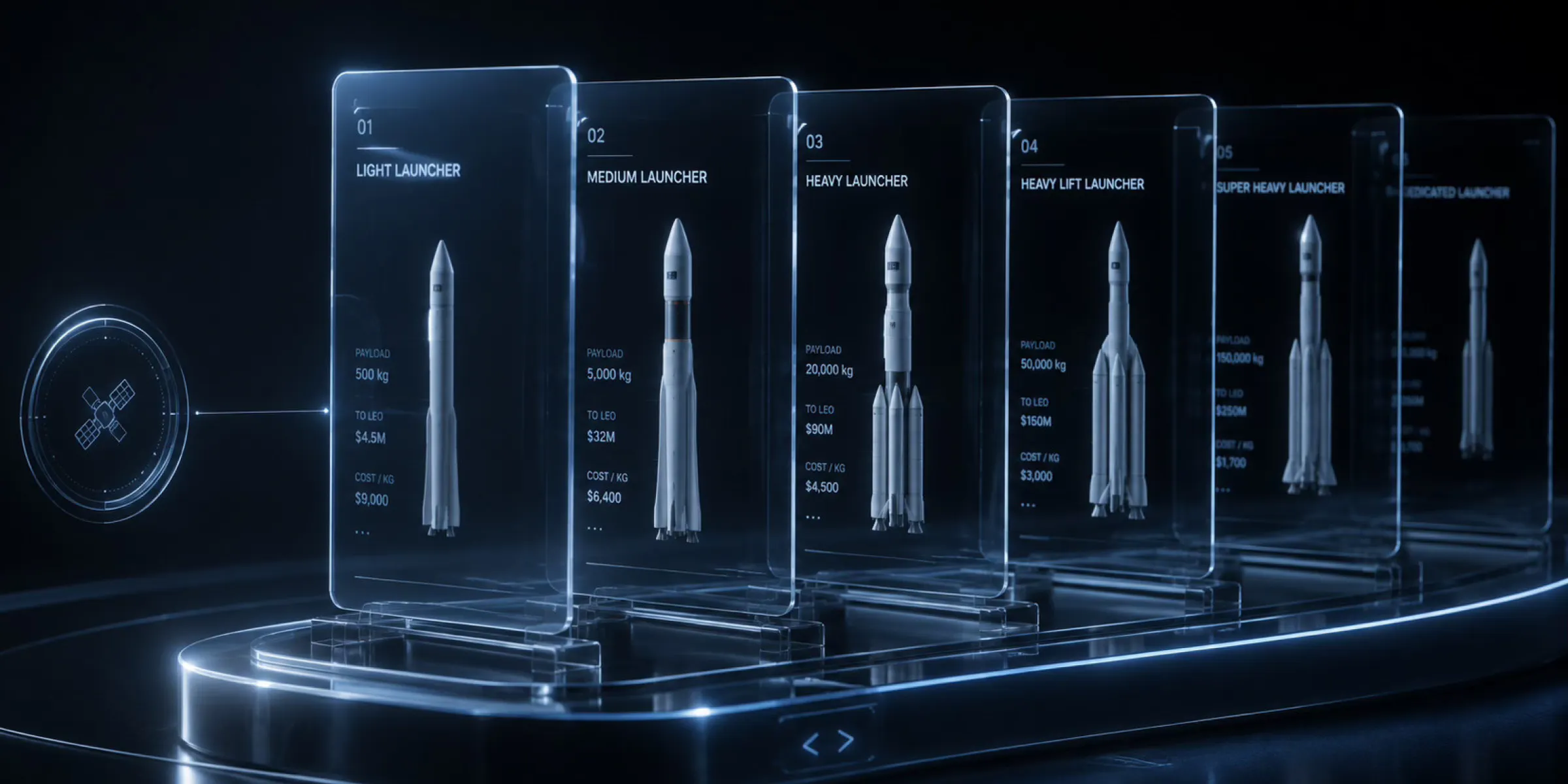
As the cost of launching satellites into space becomes ever cheaper, consulting firms, think tanks, and equity researchers alike have speculated that the industry is approaching launch commoditization in the near future. This prediction hinges on the assumption that commercial launch providers will parallel SpaceX's success at lowering launch costs over the past few decades via vertical integration, equalizing per-kilogram metrics between launch providers. In reality, it is more likely that SpaceX competitors will continue to specialize in launch options for other orbits or payloads, making the market more fragmented (and far from commoditized).
This piece provides an overview of the current launch market landscape and an explanation of the factors that determine the cost of launch for specific payloads and missions. Combined with a survey of the commercial players in the industry today, it is evident that cost-per-kilogram is an overly broad metric for characterizing space launch options that are far from commoditized, and may even become more specialized, not less, as SpaceX’s monopoly within LEO pushes competitors to comparably service other layers within launch.
Cost-per-Kilogram
Using per-kilogram metrics to extrapolate cost efficiency for space vehicles is not a new practice, and predates SpaceX’s founding by decades. NASA’s Launch Vehicle Production and Operations Cost Metrics whitepaper from 2014 explained:
“The simplest way to study the cost of space transportation is to compare the prices of launch vehicles. Unfortunately, this is generally a case of comparing apples to oranges: all launch vehicles are not equal. […] Differences in vehicle size can mask more important cost differences caused by vehicle design, nation of manufacture, and other factors.
It is true that SpaceX has driven measurable per-kilogram cost reductions for the delivery of satellites to low Earth orbit (LEO), and that LEO is heavily represented in satellite launch volume: 68% of global satellite deployments are part of LEO constellations, and 88% of all active satellites are in LEO. As of July 2025, SpaceX alone accounted for 84% of the annual mass flow to orbit (with the majority of launches to LEO) and 55% of all global launches (by count).
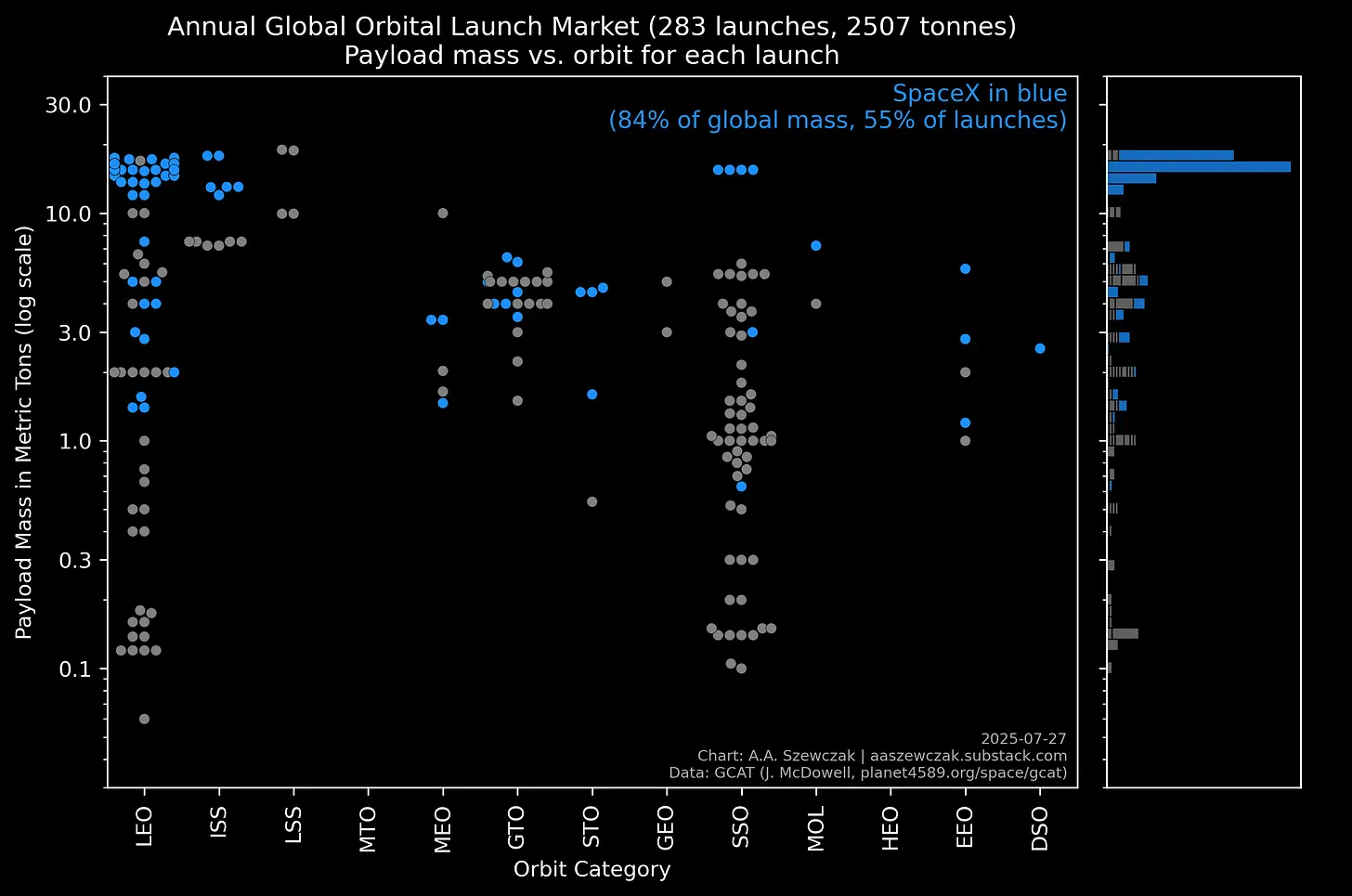
Source: Alex Szewczak
According to the 2026 SpaceX S-1, NASA’s historical average launch cost benchmark was roughly $18.5K per kilogram. The first version of Falcon 9 brought that figure down to approximately $2.7K per kilogram, and Falcon Heavy lowered it again to roughly $1.4K per kilogram. SpaceX also claims Starship could reduce the cost to orbit by 99% or more relative to that historical benchmark, which would imply a theoretical cost at or below roughly $185 per kilogram if achieved. SpaceX Starlink launches have also increased industry standards for reliability, with individual satellite failure rates around 10% as of 2026 (this is a four-times reduction compared to similar small-satellites launched between 2000 and 2016, which had failure rates around 40%).
But using cost per kilogram only tells part of the story. These cost reductions represent some of the greatest logistical and technological achievements in space flight, and SpaceX has created the first commercial orbital logistics market. At the same time, satellite operators are not purchasing commoditized kilograms in orbit; they are buying a functioning spacecraft in a specific operating state, on a specific timeline, with a specific risk profile. A reusable Falcon 9 flying SmallSat profiles to similar LEO orbits is not competing with a national-security payload that requires unique mission planning, nor that of a geostationary (GEO) satellite choosing between electric orbit raising and direct insertion.
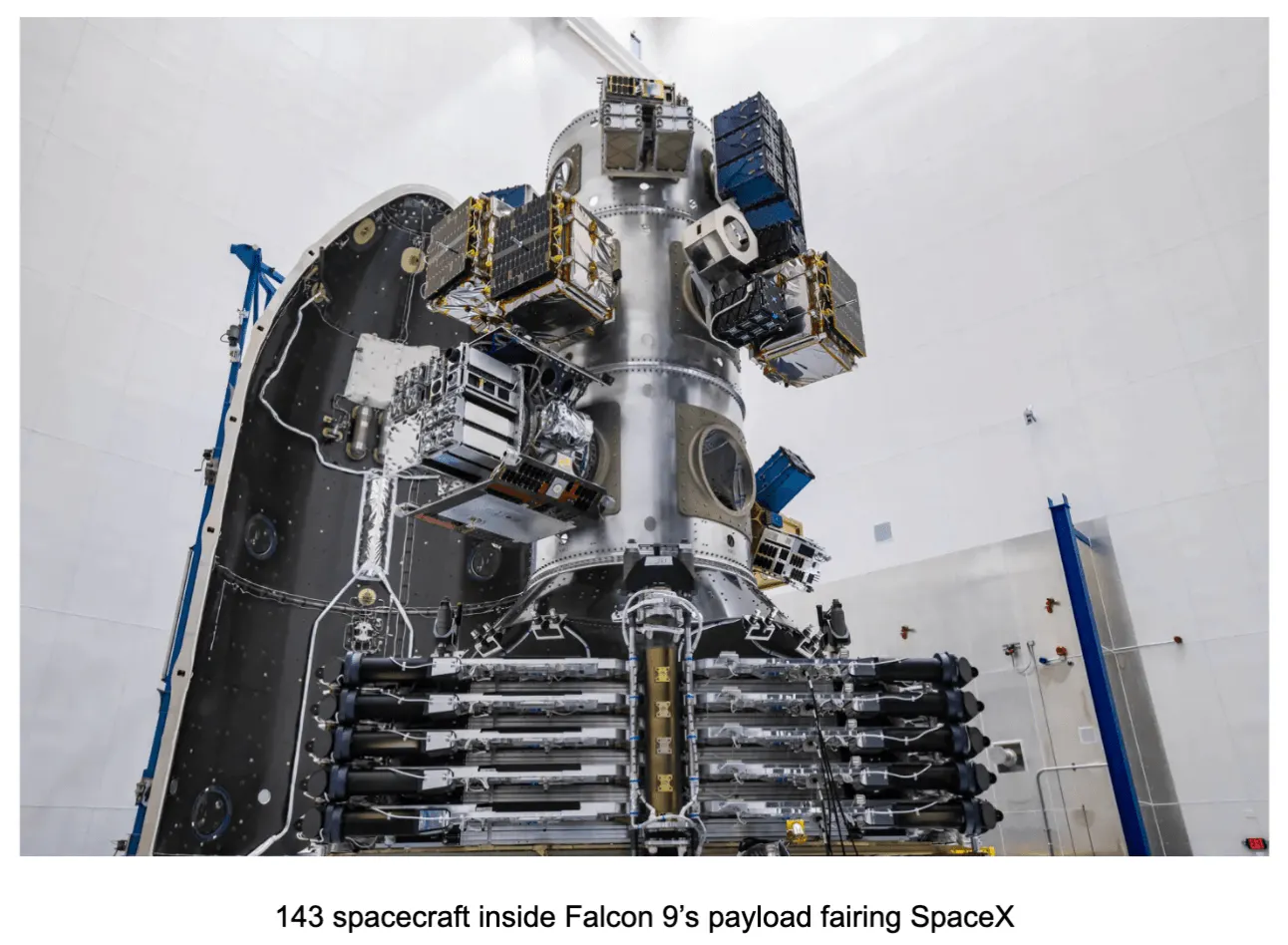
Source: The Verge
Though each of these use cases is categorized under launch, calling the launch processes for each mission profile commoditized grossly overstates the market's maturity and homogeneity. Though LEO launch has become a relatively standardized product (with demand increasing as prices fall), orbital launch is far from industry-wide commoditization for any orbit. In standardized LEO, SpaceX has made up the majority of increased launch volume, servicing both its own satellite constellation as well as third-party customers.
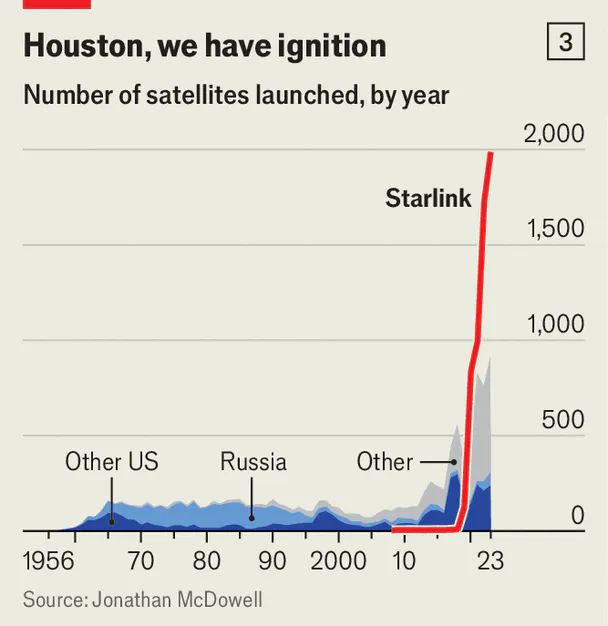
Source: The Economist
Outside of this market, customers still largely buy bespoke mission delivery dependent on variables like distance, propulsion choice, and vehicle size-class, among others, a reality that’s ignored by headlines. As Alex Greenberg, Co-founder and COO of Loft Orbital, commented:
“We on the commercial side can take advantage of military spend and these commercial companies can benefit from commoditization. We all have to remember that standards tend not to happen in the space industry. Some scientific instruments are far from ‘plug and play’. This is OK, but the device has to address the complexity around it.”
Despite its flaws, cost per kilogram remains an often-cited statistic to describe the progress being made in orbital launch technology and logistics as an intuitive shorthand to normalize and compare launch costs. Compared to markets like commercial freight competing on marginal differences in price, though, almost no satellite operator is buying the average kilogram of capacity on space flight.
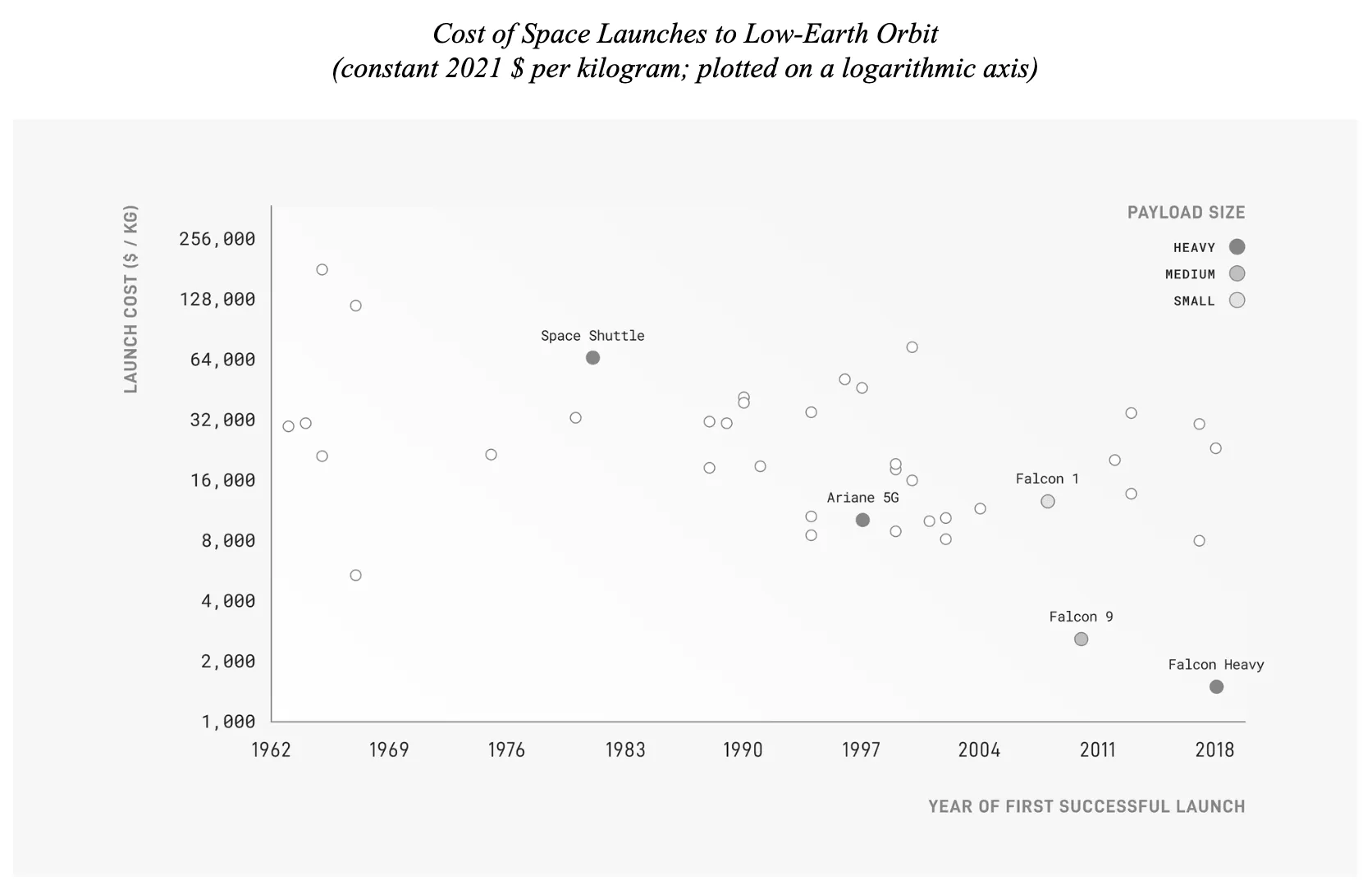
Source: SpaceX S-1
Cost per kilogram is a straightforward division of launch price by a theoretical payload capacity. SpaceX’s S-1 makes this definition explicit, noting that payload capacity can vary by trajectory, atmospheric conditions, vehicle and payload configuration, risk profile, and other associated regulatory or range-safety constraints. In other words, the advertised denominator is not a universal denominator.

Source: SpaceX S-1
On dedicated flights, one customer purchases the entire launch service, whether or not the payload uses all of the vehicle’s available performance. The relevant comparison is therefore the price borne by the customer divided by the mass that the customer places in orbit. Under ideal conditions, like a customer filling a Falcon 9 (most commonly used for commercial payloads) near capacity on a standard LEO rideshare profile, the headline economics can look extraordinary. At the same time, a dedicated spacecraft can also show a substantially higher cost per kilogram, not because the smaller payload necessarily makes the rocket much more expensive to operate, but because the customer is paying for the whole mission and cannot monetize the unused capacity.
Another problem with this metric is that the correct operating state (i.e., orbital distance) for satellites differs drastically between launch options. For a simple rideshare payload, a smaller spacecraft transported into space at a significantly reduced cost by sharing a rocket with a primary payload, getting released into a common sun-synchronous orbit (a specific form of LEO orbit) may be enough. For other satellites, this approach is insufficient. A GEO spacecraft launched to geosynchronous transfer orbit (GTO) still has to raise itself to geostationary orbit. A MEO spacecraft or government satellite launch introduces additional mission-specific constraints. None of these factors are captured by dividing the launch ticket by the rocket’s maximum advertised payload.
The Launch Cost Stack
A more complete picture of the evolution of launch costs and comparisons between providers is enabled by considering the total cost of ordering a launch mission for the buyers, and the total costs to operate launch vehicles for suppliers.
Total Buyer Mission Cost
The total buyer mission cost is the complete cost of buying and fielding a system, inclusive of the launch service price and the direct expenditures needed to place the satellite into useful operation.
The launch service price is the advertised or contracted price paid for the launch service itself. In commercial markets, this may appear as an average or quoted published rideshare price. In government missions, it may appear as a launch services contract or procurement award. It is analogous to a base freight rate: it buys transportation capacity and certain standard services, but does not necessarily capture every cost required to get the spacecraft into its final useful orbit.
The launch service price is one of the most visible launch cost measures. Cost-per-kilogram comparisons may be quoted directly for rideshare services or derived by dividing a dedicated-launch price by a vehicle’s stated payload capacity, but leave out the other costs associated with a specific mission. Examples of additional spending expenses can include any or all of the following: payload integration, adapters, dispensers, analysis, testing, licensing support, insurance, schedule risk, orbit-raising hardware, onboard propellant, transfer services, ground operations, and potentially revenue lost due to delays during transfer to the final orbit.
Costs can vary even more when the launch service does not deliver the spacecraft directly to its final working orbit. A spacecraft delivered to geostationary transfer orbit may require additional propellant, propulsion, time, and operations support to reach GEO. Similarly, rideshare satellites deployed into a common orbit may require onboard propulsion or an orbital transfer vehicle to reach a custom working orbit. Customers launching smaller payloads may also face a minimum booking price or fixed integration charges, which can reduce the cost advantage of smaller satellites.
Supplier Launch Costs
The supplier’s cost structure includes vehicle manufacturing, refurbishment, upper-stage expendability, range operations, labor, facilities, capital depreciation, insurance, regulatory compliance, and mission management.

Source: Eddie Brown, CEO of Astron Systems
The supplier’s cost is separate from the profit margin included in the price charged to customers and is more analogous to flyaway cost, a measure originally developed to measure the cost of an aircraft absent sunk costs. The provider’s recurring mission cost can include the recurring production or acquisition of consumed and expendable hardware, reusable-hardware recovery and refurbishment, launch-site and range operations, mission integration, mission management, and mission-specific work required to provide the launch service.
Orbital Positioning
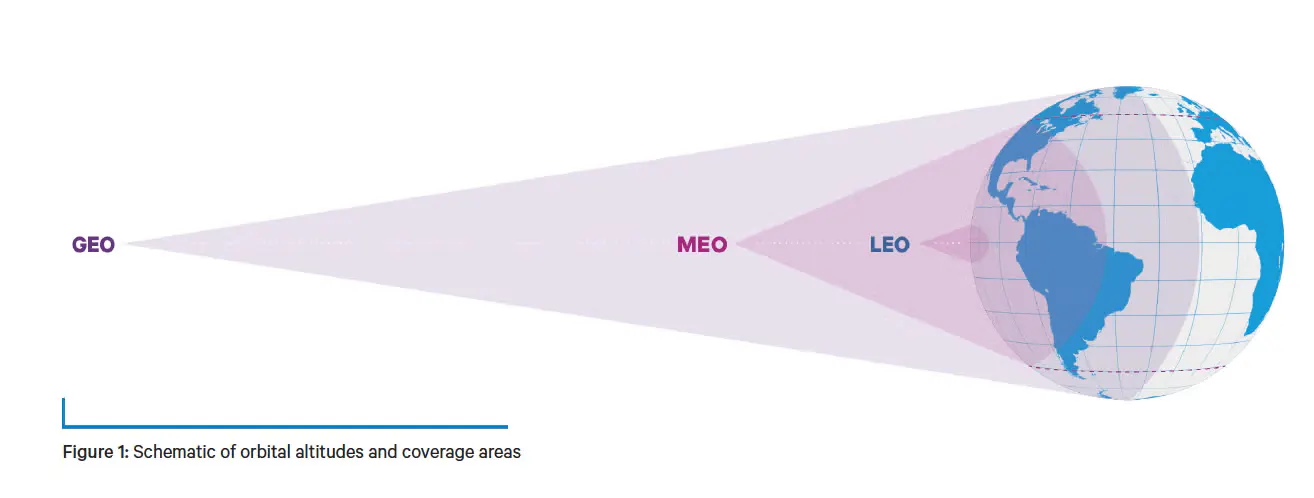
Satellites are placed at different orbital distances depending on their mission, altitude, and coverage needs. Low Earth orbit is close to Earth and is commonly used for imaging, scientific research, and communications because it allows satellites to collect detailed data and transmit signals with lower delay. Medium Earth orbit is often used for navigation systems, since it provides wider coverage while still maintaining reliable signal strength. Geostationary orbit, much farther from Earth, allows a satellite to remain fixed over the same point on the equator, making it useful for weather monitoring, television broadcasting, and long-distance communications. Companies choose orbits for their satellites depending on factors such as coverage area, resolution, signal delay, launch cost, and satellite useful life.
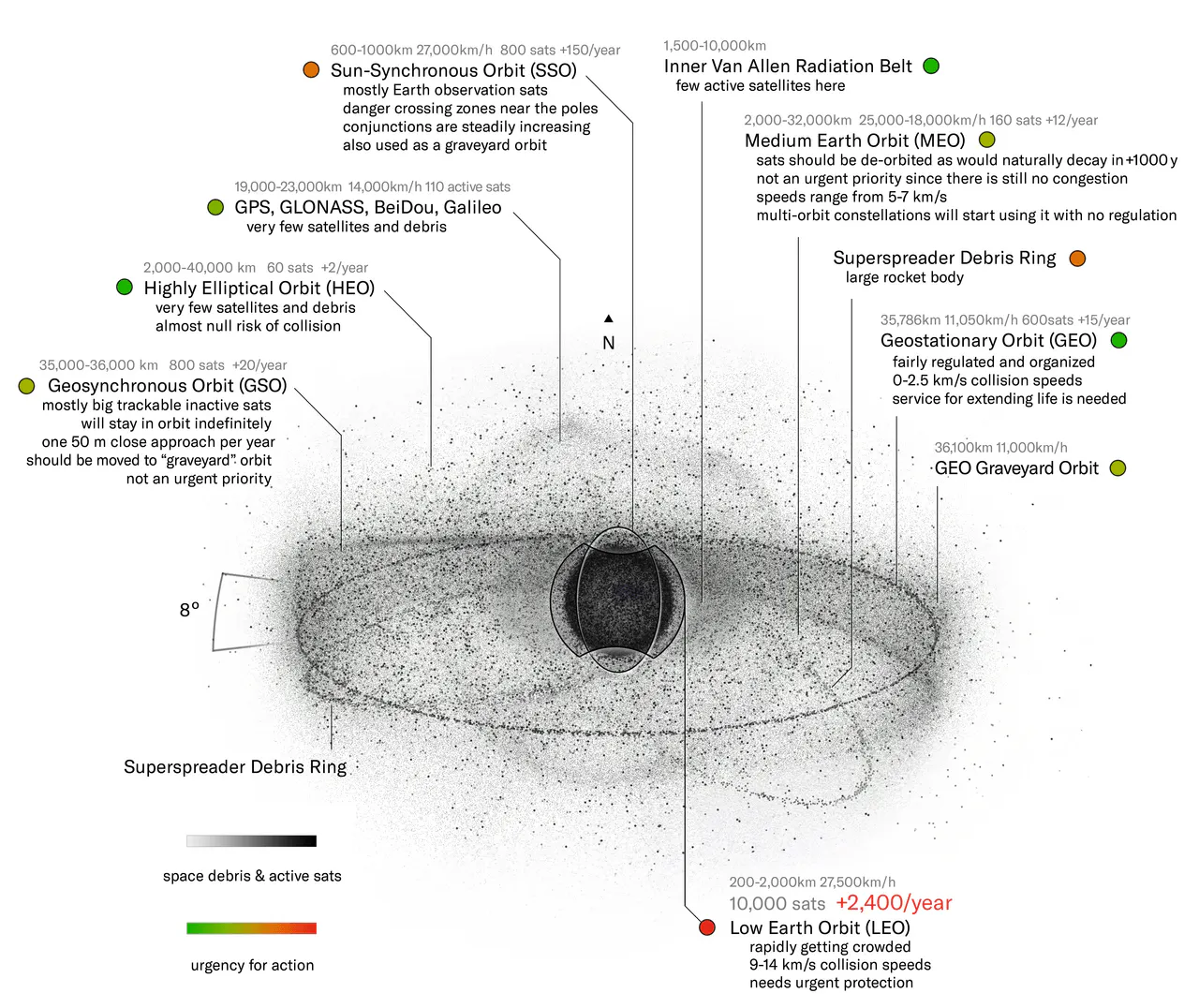
Source: Pablo Budassi
Low Earth Orbit
LEO is an orbital region between 200 and 2K km above Earth’s surface and has the closest existing approximation of a space logistics market. Satellites in this region are often used for communication, given their strong signal quality and ability to capture detailed images. As satellites move quickly (7.8 kilometers per second) across the sky, one satellite generally covers a given location for only about ten minutes, and large constellations are often needed for satellites to provide continuous coverage.
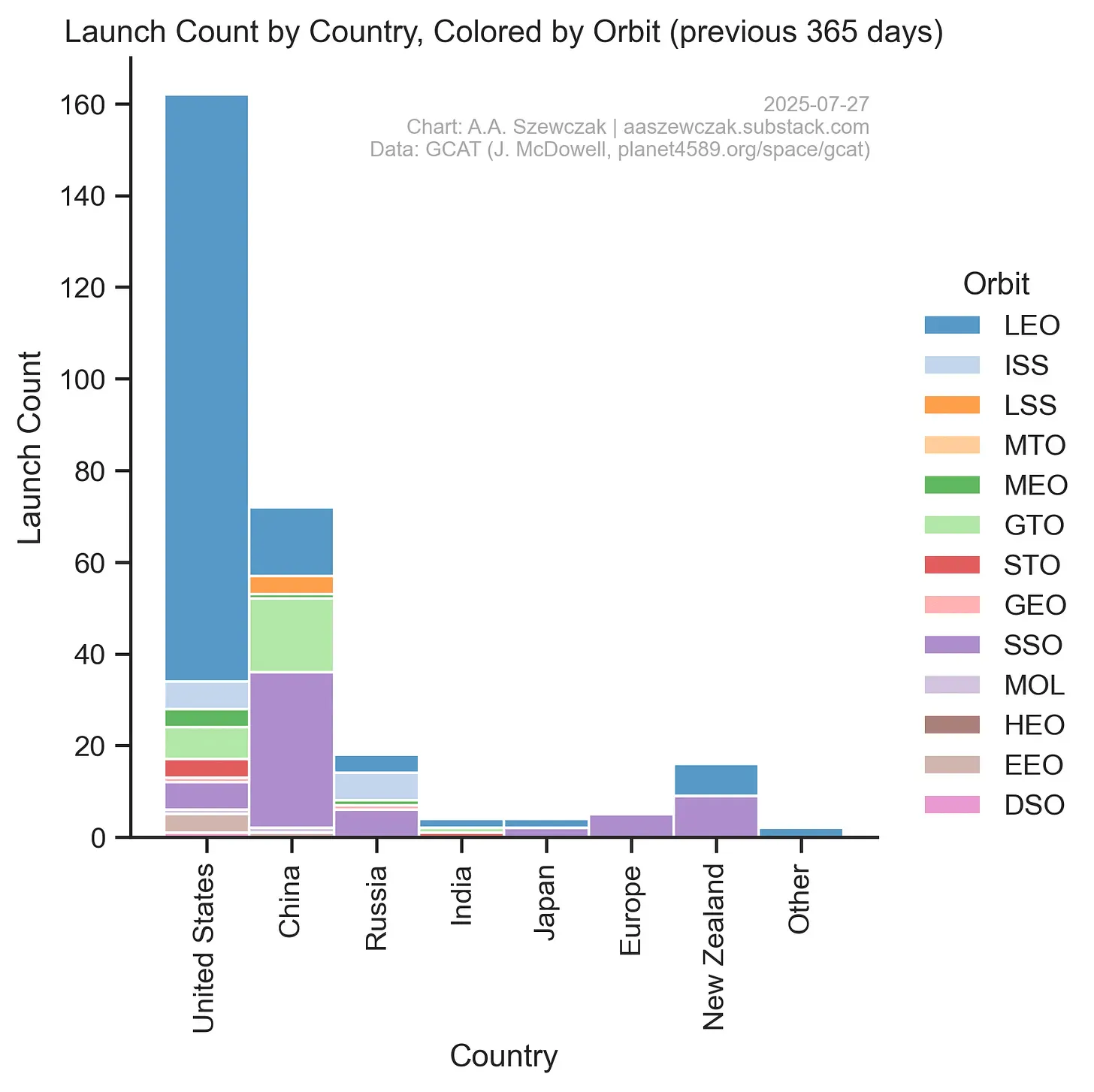
Source: Alex Szewczak
Of the major orbits, LEO has the highest launch frequency, the most commercial demand, most standardized mission profiles, and the highest constellation volume. It is also where launch vehicle reusability produces the clearest economic effect, because vehicles can fly often, mission profiles can repeat, and payloads can be designed around the launch system. Though reusable vehicles still improve the economics of other orbits, the higher energy cost required to get to MEO or GEO and lower satellite churn in those orbits are less favorable for near-term reusable economics. Even with relative standardization, LEO clients can be broken out into several distinct buyer groups.
The first “buyer” group is SpaceX’s owned communications constellation, Starlink. Starlink gives SpaceX recurring payload demand, standardized spacecraft payloads, repeatable mission profiles, and a reason to keep launch cadence high even when external demand varies. According to SpaceX, Starlink launched more than 80 percent of global mass to orbit each year since 2023 and operated approximately 9,600 Starlink broadband and mobile satellites as of March 2026.
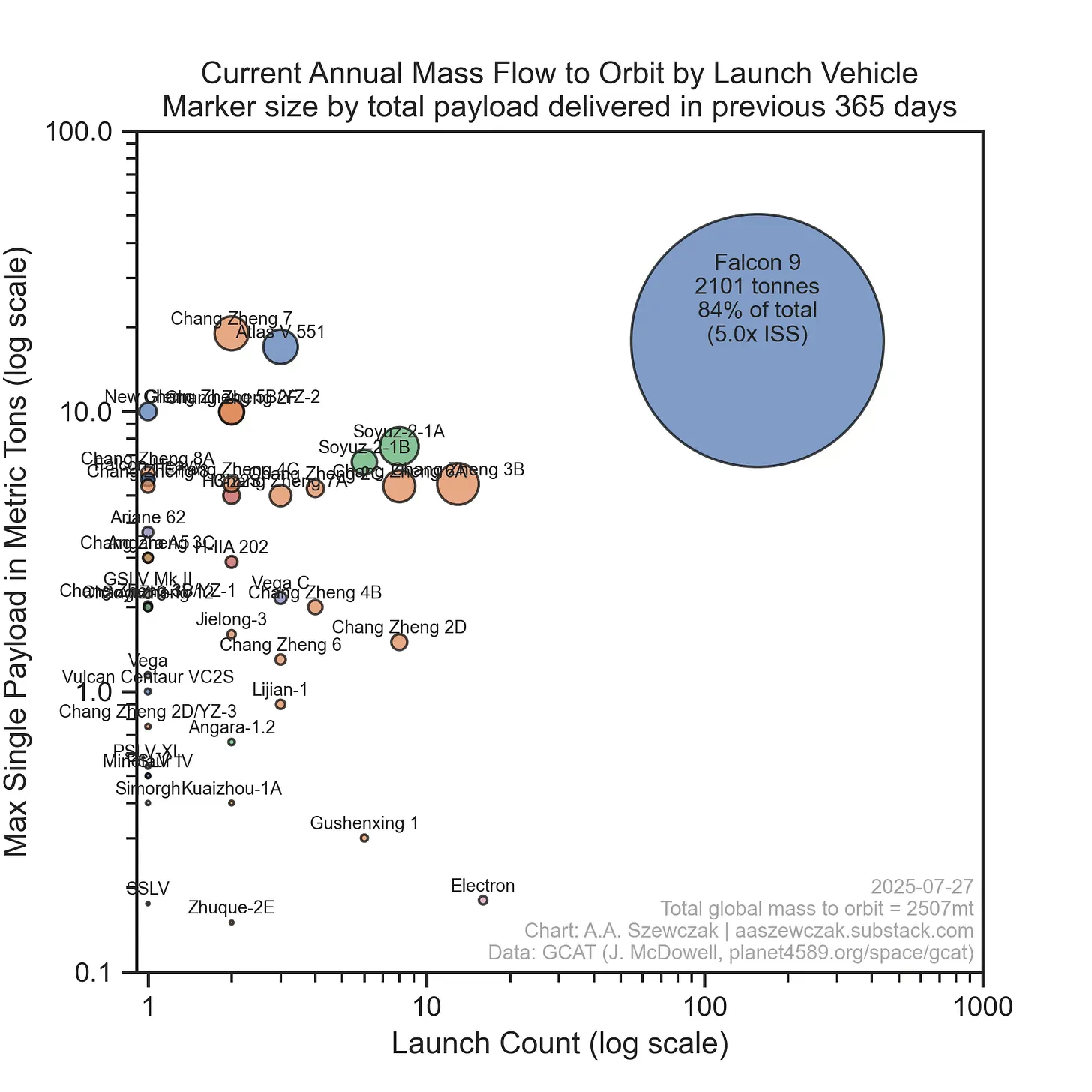
Source: Alex Szewczak
Since launch economics improve with uses for a single vehicle, a constellation operator like Starlink that can fill rockets, use consistent interfaces, and accept repeatable orbital shells has very different economics from a one-off spacecraft customer. Amazon Leo is the closest competitor to Starlink in terms of buyer volume. As of June 2026, Amazon Leo does not have its own launch capacity and instead opts to partner with multiple contractors, which also means that it does not have the same ability to launch on command that Starlink has within SpaceX.
The second buyer group consists of relatively smaller constellation operators in terms of total satellites launched. This group includes companies like Eutelsat OneWeb, Telesat Lightspeed, AST SpaceMobile, Planet, Spire, and other communications, Earth observation, and IoT networks that need recurring access to orbit but do not individually generate Starlink-like launch volume.
The satellites in this group include both small satellite “smallsats” (with a launch mass of less than 500 kg) and larger traditional satellites. BryceTech reported that nearly 2.8K small satellites launched in 2024, representing 97% of all spacecraft launched and 81% of total upmass. At the same time, the average smallsat mass reached a record 223 kg in 2024.
Rideshare vs. Dedicated Launch
Smallsat and cubesat (modular 10 cm³ satellites) buyers sit below large constellation deployments in both launch cadence and unit economics. Though rideshare customers can access launch capacity in similar ways to constellations, they lack the better repetition economics of the largest constellation deployers. SpaceX’s Transporter rideshare program, for example, has averaged one launch roughly every four months as of July 2026, while Starlink has sustained a deployment cadence of at least one dedicated mission per week.
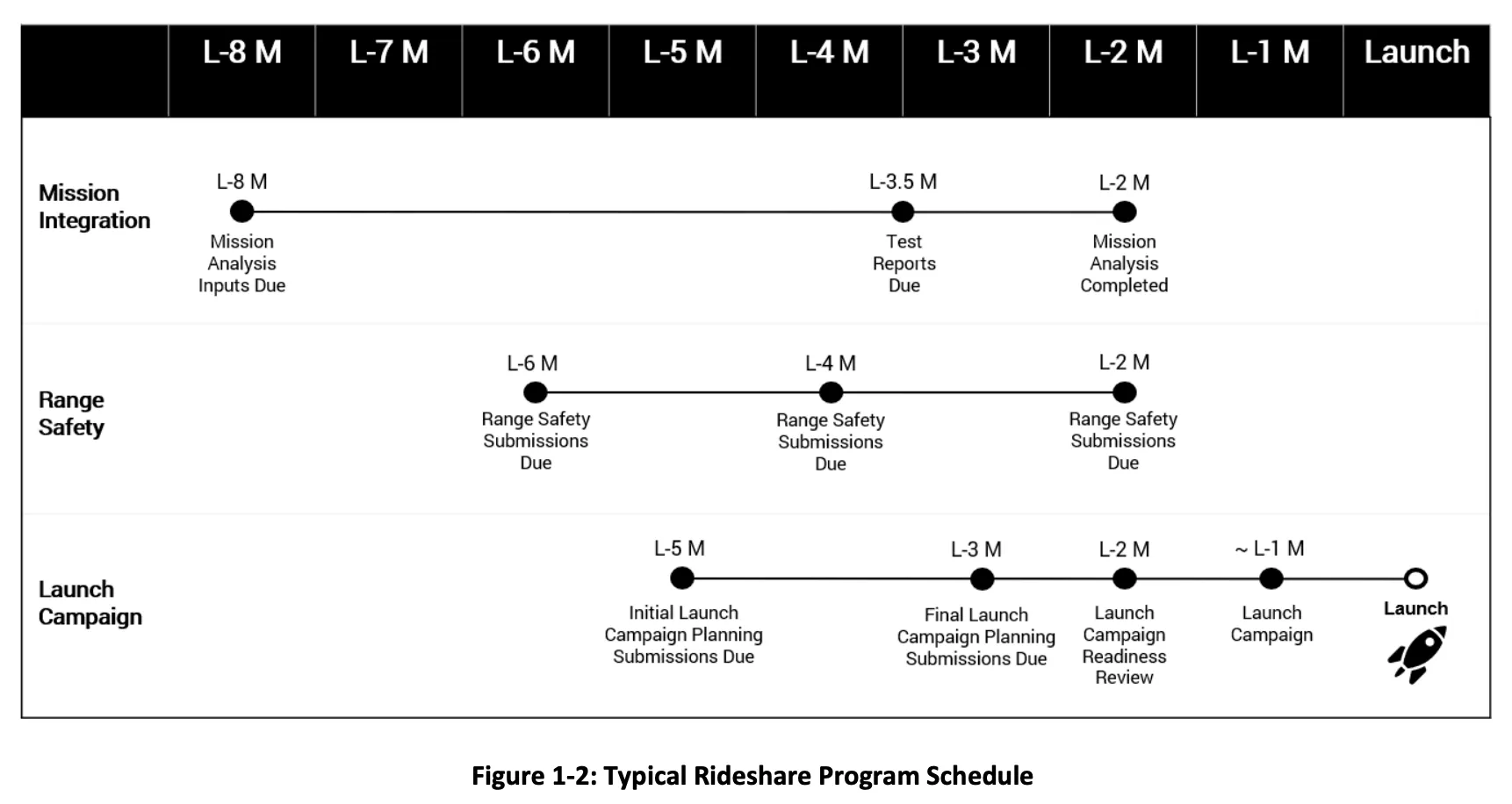
Though rideshare lowers the entry price for small payloads, it does not give every customer the same economics. A 50-kilogram spacecraft using the full minimum slot receives the advertised unit price. A 10-kilogram spacecraft buying that same minimum slot has a much higher effective price per kilogram before any additional mission costs. The buyer saves money relative to a dedicated mission, but it also accepts the schedule, orbit, deployment rules, and interface constraints of the shared launch.
Source: SpaceX
Though dedicated launches appear expensive when evaluated strictly by cost per kilogram relative to ridesharing options, the service is designed around a different purchasing problem. Dedicated launch buyers may be paying for schedule priority, orbit specificity, lower integration complexity, security, or independence from a larger vehicle’s rideshare. Given the many different needs of satellite operators, launch providers here can include anything from firms focused on dedicated small launch like Rocket Lab, to larger satellite launch customers like AST Spacemobile.
Medium Earth Orbit
As its name implies, Medium Earth Orbit (MEO) is the space region between LEO and Geostationary Orbit (GEO), spanning 2K to 35.8K kilometers above Earth. Like LEO satellites, MEO satellites are often found in constellations to maintain continuous coverage of the Earth, but are able to cover more area than LEO satellites. MEO constellations are composed of fewer satellites with higher sensitivity to orbital geometry.
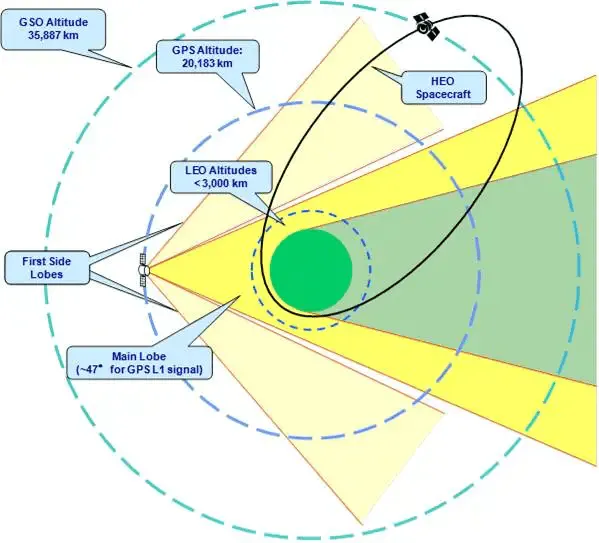
Given the relatively higher difficulty of launching to MEO (because it is further away from Earth) and specific geometries for individual satellite placement, launches for satellites in this region are planned individually instead of by batch. The 31 satellites in the US Global Positioning System (GPS) constellation operate in the MEO orbit at 20.2K kilometers above ground in six orbital planes, circling Earth twice per day.
GPS satellites are designed and constructed for accuracy and national security purposes, meaning the cost of operation matters less than ensuring GPS operations remain functional at all times. The US GPS constellation needs only 24 satellites to operate but routinely operates 31 total to provide a buffer of spares. The US Space Systems Command released a statement in 2026 that it was adjusting launch assignments to prioritize GPS III capability delivery.
Source: NASA
By contrast, SES’s O3b mPOWER communication constellation operates much lower in MEO, at roughly 8K kilometers, with 13 satellites. The O3b mPOWER constellation is used primarily for military and commercial communication. The system is described as operating with other constellations, communicating in conjunction with SES's fleet of geostationary satellites, and with SpaceX's Starlink LEO satellite constellations. In comparison to its co-functioning Starlink satellites, MEO constellations such as O3b mPOWER operate with fewer, higher-complexity satellites placed into more demanding orbits, meaning the successful deployment of each individual spacecraft is more critical.
Geostationary Orbit
The GEO orbit begins where MEO ends, at 35.8 km above the equator. Satellites in this orbit have an orbital period equal to Earth's rotational period and therefore appear to stay fixed over the same point on Earth. This makes them useful for TV broadcasting, weather monitoring, and communications to fixed satellite dishes, because ground antennas do not need to track a moving satellite. One GEO satellite can cover up to 42% of the Earth’s surface, avoiding handoff problems, but the long distance between the satellite and ground-based infrastructure creates higher signal delay and weaker coverage near the poles.
Source: Satellite Today
Satellites in this region are optimized for performance, coverage, and long operating lives. If LEO constellation smallsats are analogous to drones in revolutionizing autonomous systems, GEO satellites generally fall under the umbrella of “exquisite” machines, a term borrowed from US military expenditures to describe “pricey, sophisticated, and often minimally procured systems.” In other words, justifying a satellite launch to GEO requires explicit enterprise or government need, and execution requires the smallest margin for error of the three major orbits. Given the precision in placement required, individual GEO launch costs remain materially higher than MEO or LEO.
An example of a GEO satellite is Eutelsat 172B. It launched in June 2017 as an all-electric satellite and reached geostationary orbit in October, which Airbus described at the time as a record for electric orbit raising. Electric propulsion reduced the propellant burden and supported a satellite with an expected life of more than 15 years, including the four months required for the satellite to get from launch to its operating orbit.
Competitive Landscape
Major Launch Providers
Launch options are not consistent across providers or internally within individual providers. Launch volume, however, is the best measure of a launch provider’s operational efficiency: if a provider cannot provide a certain cadence of launches or fails to launch any vehicles in a calendar year, they are less likely to see commercial or government contracts in the future.
SpaceX
SpaceX occupies the high-cadence, medium- and heavy-lift lane. Falcon 9 completed 165 launches in 2025, representing over half of global orbital launches and more than 80% of mass delivered to orbit. SpaceX’s dominance in the launch space stems not only from its share of the market, but also from the combination of reusable vehicles, multiple launch sites, an extensive flight record, standardized rideshare missions, and a large internal customer via Starlink that enable this market share. Starlink creates recurring demand that maintains high launch cadence even as external demand varies.
SpaceX also serves additional markets with the same launch system. The Transporter and Bandwagon missions provide standardized rideshare access for small satellites. Dedicated Falcon 9 missions serve commercial constellations and larger spacecraft. NASA purchases integrated crew and cargo transportation, and national-security customers order missions with additional assurance and handling requirements. Falcon Heavy extends the company’s reach to larger and higher-energy payloads.
Rocket Lab
Rocket Lab is focused primarily on dedicated small-launch and responsive-mission launches. Its Electron vehicle carries up to 300 kilograms to LEO, far less than Falcon 9. Rocket Lab competes with SpaceX, however, by giving smaller payloads control over launch timing, initial orbit, deployment sequence, and compatibility requirements.
Rocket Lab has used dedicated Electron missions to place BlackSky satellites into selected orbital planes and deploy the Kinéis Internet-of-Things constellation through a planned series of launches. These customers are purchasing control over when and where additional network capacity becomes operational, rather than simply buying the cheapest available launch. Rocket Lab also serves defense customers through HASTE, an Electron-derived suborbital vehicle used for hypersonic and related test missions. Three of Rocket Lab’s 21 missions in 2025 were HASTE flights.
Electron’s principal constraint is its size. Customers receive greater schedule and orbital control, but at a materially higher normalized price than a fully utilized SpaceX rideshare slot. Rocket Lab’s planned Neutron vehicle is intended to move the company into a larger reusable class, with testing beginning in 2026.
Blue Origin
Blue Origin is an emerging heavy-lift competitor to SpaceX rather than a current volume competitor. Blue Origin’s New Glenn rocket flew twice in 2025 and completed its third mission in April 2026. Blue Origin advertises a capacity of 45 metric tons to LEO and more than 13 metric tons to GTO. The vehicle reached orbit on its first flight, and its reusable first stage completed a successful landing during the second. In May 2026, the rocket exploded on the launchpad during a ground test, after its April flight failed to deliver satellites to orbit.
New Glenn is intended to compete for large commercial satellites, constellation deployments, NASA science missions, and national-security payloads. Its larger payload capacity gives it a different market position from Electron or Alpha and positions it more directly against Falcon 9, Falcon Heavy, and Vulcan. As launch volume lags far behind SpaceX currently, Blue Origin’s competitive significance therefore rests more on prospective capacity and customer commitments than on current launch share.
United Launch Alliance
United Launch Alliance competes in mission-assured government, high-value commercial, constellation, and high-energy launch. ULA’s broader competitive case rests on mission assurance, orbital accuracy, and demanding insertion profiles. ULA completed six missions in 2025 using its Atlas V and Vulcan rockets. Vulcan received national-security certification in March 2025, while Atlas V continued to support commercial and constellation missions.
Despite these contracts, ULA’s launch model remains mostly based on expendable vehicles and a relatively low launch cadence, which limits its ability to compete with SpaceX on launch cost or frequency.
Firefly Aerospace
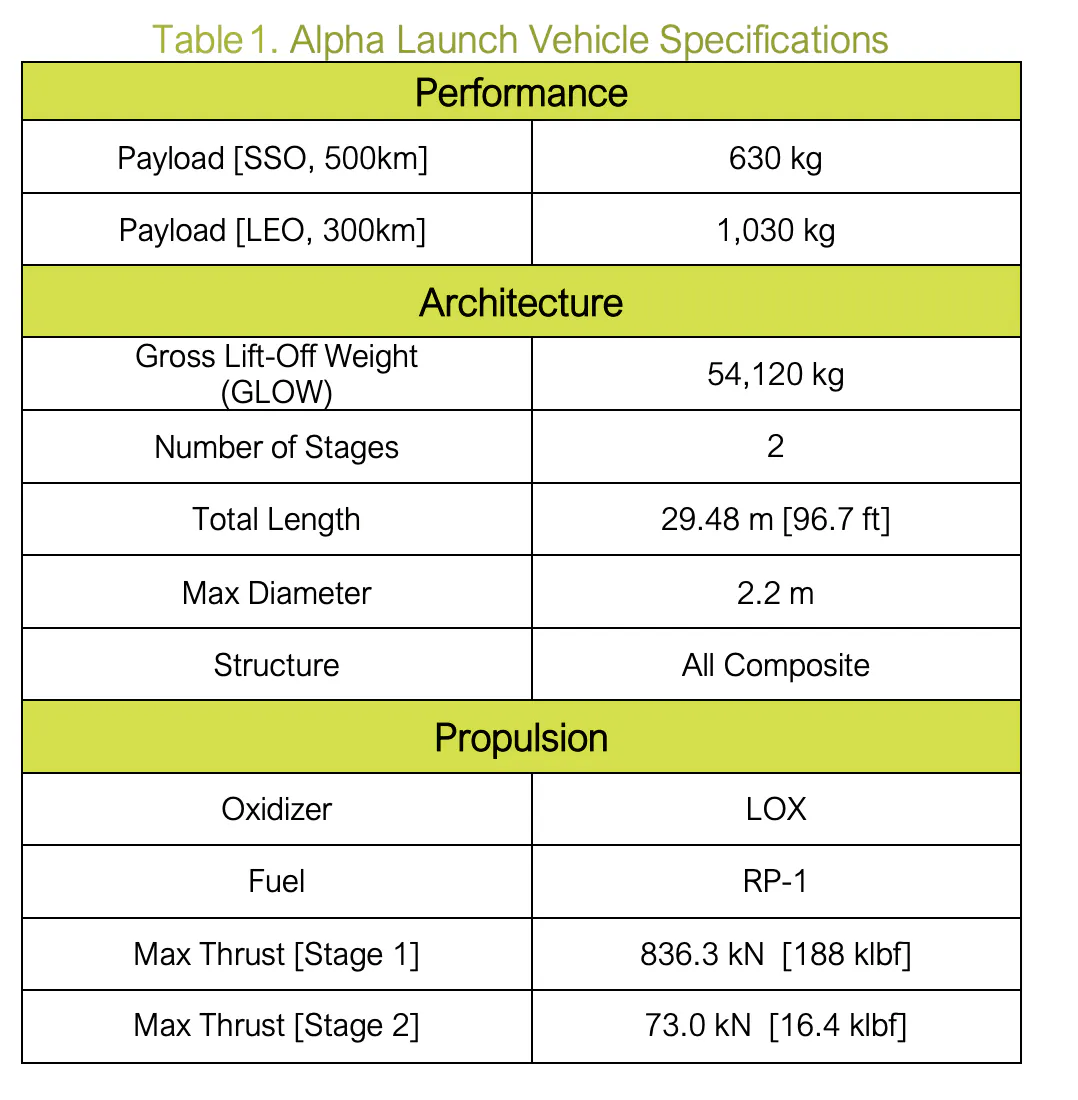
Firefly Aerospace occupies the space between traditional small launch and medium lift. Its Alpha vehicle’s official payload guide lists a capacity of 1K kilograms to a 300-kilometer LEO orbit and 630 kilograms to a 500-kilometer sun-synchronous orbit. It can carry substantially more weight than Electron, but far less than Falcon 9, Vulcan, or New Glenn.
This positions Alpha for customers whose spacecraft are too large for the smallest dedicated vehicles but would eschew medium-lift rockets for economic or security reasons. Firefly has signed launch agreements and contracts with commercial and government customers, including Lockheed Martin, L3Harris, NASA, and the US Space Force. Its VICTUS NOX mission also demonstrated the potential value of responsive launch by flying after receiving 24 hours’ notice.
Price Comparisons
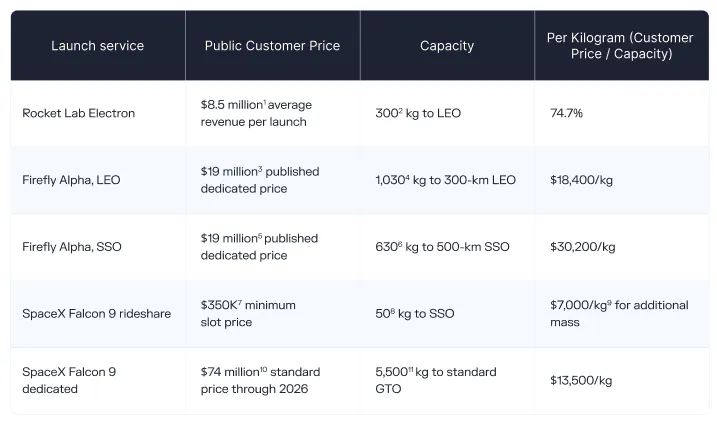
Publicly listed launch prices from SpaceX, Rocket Lab, and Firefly Aerospace are useful as first-order price anchors, different reporting standards mean they are not always directly comparable.
Source: [1] Rocket Lab Corporation, [2] Rocket Lab, [3] Firefly Aerospace, [4] Firefly Aerospace, [5] Firefly Aerospace, [6] Firefly Aerospace, [7] SpaceX, [8] SpaceX, [9] Jack Kuhr, [10] SpaceX, [11] SpaceX
At first glance, the table appears to establish a straightforward price hierarchy. SpaceX rideshare is the least expensive service per kilogram, followed by the dedicated Falcon 9, Firefly Alpha, and Rocket Lab Electron offerings. But such a ranking combines a shared rideshare slot, dedicated small-launch vehicles, and a dedicated medium-lift vehicle flying to different orbital destinations, which are not interchangeable versions of the same service.
Rocket Lab provides the most complete public financial view of the three providers. In its 2026 annual filing, the company reported a 2025 average revenue of $8.5 million per launch and an average cost of $4.8 million per launch. However, even these numbers are somewhat ambiguous because Rocket Lab’s average reflects a mix of missions rather than a standard Electron list price. The figure can change depending on orbit, insertion requirements, payload handling, launch location, schedule sensitivity, and accounting treatment.
Furthermore, three of Rocket Lab’s 21 missions in 2025 were HASTE suborbital missions, meaning that the average for the year also combines orbital Electron launches with a related but different launch product. Dividing that blended transaction value by Electron’s maximum 300-kilogram LEO capacity is therefore illustrative rather than a measure of what the average Electron customer actually paid per kilogram.
Firefly Aerospace also demonstrates how the denominator alone can materially change the apparent economics. Firefly Aerospace publishes the same $19 million price for LEO and SSO, but its stated payload capacity declines from 1,030 kilograms for a 300-kilometer LEO mission to 630 kilograms for a 500-kilometer sun-synchronous mission. The resulting normalized price (price/capacity) rises from roughly $18.4K to $30.2K per kilogram, even though the headline launch price does not change.
Source: Firefly Aerospace
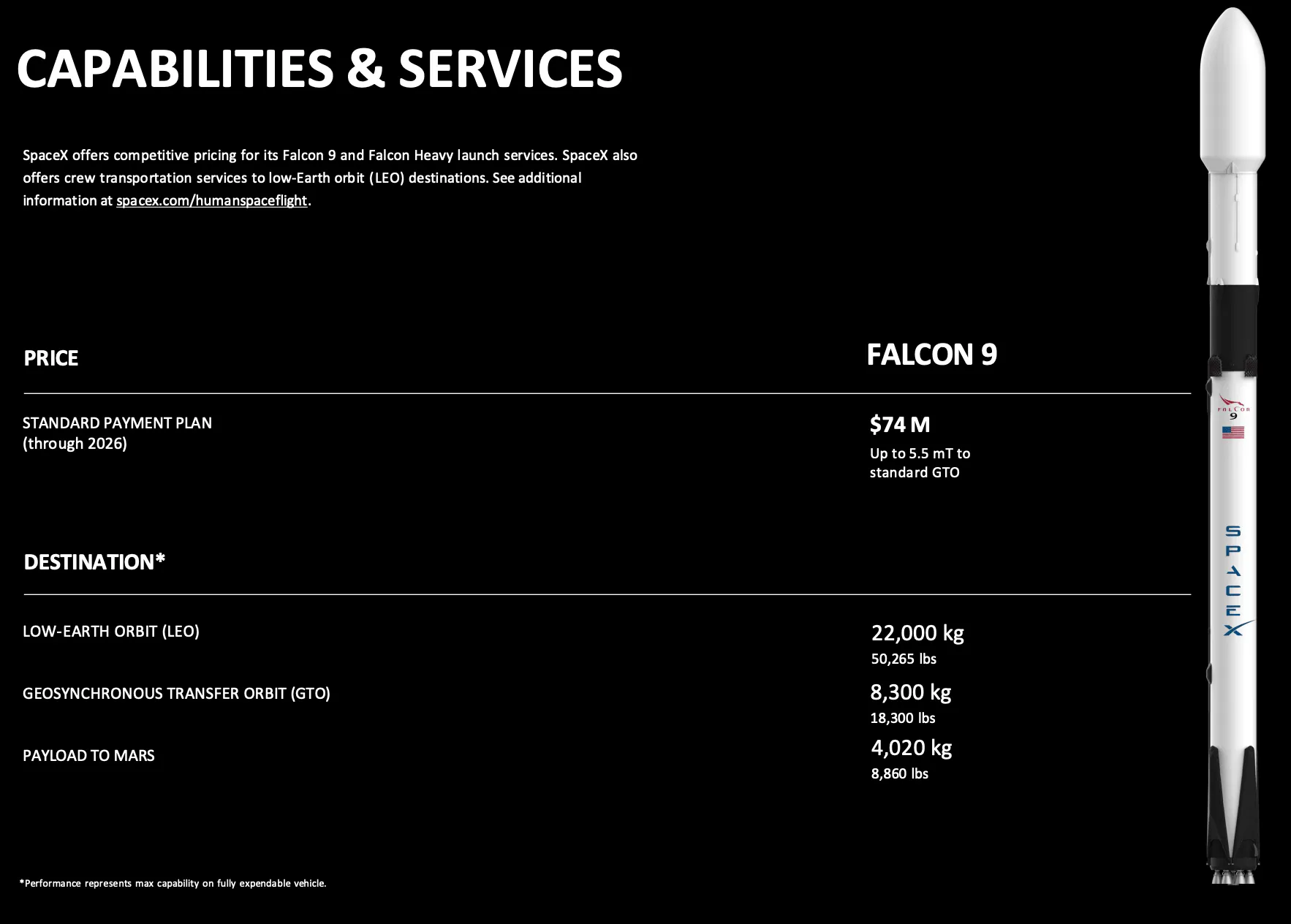
SpaceX’s rideshare program is the closest example in the table to a standardized freight rate. The company publishes a starting price of $350K for up to 50 kilograms to sun-synchronous orbit, with additional mass priced at $7K per kilogram. But even this relatively standardized product depends on utilization. A 10-kilogram payload paying the same $350K starting price would have an effective launch-service price of $35K per kilogram, not $7K. The Falcon 9 figure is also based on a GTO mission, while the Electron and Alpha rows use LEO or SSO reference missions. Comparing the resulting figures without accounting for destination risks treating one kilogram delivered to LEO as economically equivalent to one kilogram delivered toward GEO.
Source: SpaceX
SpaceX now reports financial results for its broader Space segment, but that segment contains more than commercial Falcon 9 launches; Space segment revenue or segment cost cannot be divided by total Falcon 9 launches to produce a reliable average price or recurring cost per mission. In addition, the absence of public prices for ULA, Blue Origin, and Northrop Grumman is also meaningful. These providers disproportionately serve government, high-energy, high-value, or mission-specific customers for whom the contract may include extensive integration, analysis, infrastructure, security, and assurance work
Launch Market Implications
Winner-Take-Most
SpaceX has been described by industry and policy sources as holding a near-monopolistic position in the LEO launch market, reflected by Starlink deployments, commercial constellation batches, and small satellites able to use standardized Transporter or Bandwagon rideshare missions. Both internal Starlink and external demand only further drive the launch feedback cycles that allow SpaceX to drive down prices for customers and outcompete competitors on ease of access.
This creates substantial pressure on providers attempting to compete for standardized LEO missions solely through price or payload capacity. A small satellite that can wait for a rideshare and maneuver from the deployment orbit will generally struggle to justify purchasing an entire Electron or Alpha launch. Similarly, a large constellation operator able to fill Falcon 9 regularly will find it difficult to match SpaceX prices through alternative providers with lower-cadence or singe-use vehicles.
While this means that standardized LEO increasingly resembles a scale business in which SpaceX sets the price and availability benchmark, more constrained missions (even in LEO) remain bespoke service businesses in which providers can charge for schedule control, precise insertion, payload independence, security, mission assurance, or responsive launch.
Vertical Integration
Vertical integration compounds SpaceX’s advantage because it enables the company to internalize the feedback loop between launch and satellite economics rather than negotiate across it. Launch providers like Rocket Lab and Firefly also have vertically integrated operations with in-house construction of satellites and satellite components.
A standalone satellite operator buying launch on the open market treats launch price, timing, and specifications as external variable it must accept and design around. In contrast, when Starship lowers the marginal cost of mass to orbit, that saving does not have to be captured by a launch provider and partially passed on; it flows directly into the constellation's unit economics, where it can fund larger satellites, denser coverage, or faster replenishment without a commercial markup in between.
The integration also aligns incentives that are otherwise in tension. A merchant launch provider profits from charging as much as the market will bear per kilogram, while its satellite customers want that price as low as possible. Inside a single firm, that conflict disappears: every dollar of launch margin foregone is recovered downstream in service revenue from Starlink subscribers. SpaceX can therefore price launch capacity to itself at cost and still profit, which independent launcher cannot do without surrendering their own business.
In addition, control over both ends of development shortens the iteration cycle. Satellite designers can assume specific fairing dimensions, deployment mechanisms, and launch cadence as fixed inputs rather than constraints to be reconciled. This results in a system that is optimized end to end, where launch and payload evolve together instead of one waiting on the other.
Launch Will Commoditize by Market Lane
The market is therefore unlikely to converge on one universal launch price or one universal launch provider. It is more likely to separate into several lanes.
The first is standardized transportation to common LEO and SSO destinations. This lane is characterized by rideshare, repeatable interfaces, schedule flexibility, high cadence, and strong price competition. SpaceX has the clearest structural advantage here.
The second is dedicated and responsive launch. Customers in this lane pay more per kilogram to control orbital placement, launch timing, payload handling, or response speed. Smaller vehicle operators like Rocket Lab and Firefly are positioned around these requirements, particularly for Earth observation, technology demonstrations, hypersonic testing, and national-security missions. Larger vehicle launchers like ULA, Blue Origin, Arianespace, and other national providers also compete in this lane even when their headline prices exceed the lowest commercial alternative.
The third is high-energy and mission-specific delivery to MEO, GEO, lunar, or interplanetary destinations. In this lane, vehicle performance, upper-stage capability, transfer time, spacecraft propulsion, and mission assurance can matter more than the theoretical price per kilogram.
A New Paradigm of Measuring Launch Costs
Cost per kilogram will remain an important benchmark because it establishes the price pressure created by the most efficient launch systems, but it will not become the clearing price for every mission. Like the difference between flying commercial and flying private, the lowest unit price is available when the customer accepts a standardized schedule, destination, interface, and operating model. Customers that require control over timing, orbital placement, payload handling, security, or mission assurance will continue to pay a premium for dedicated service. As the launch space continues to grow and evolve, it is likely that new, more specific metrics will be used to directly compare options that are truly apples-to-apples.


