Thesis
The physical-asset economy remains the backbone of global commercial operations. From manufacturing lines and logistics centers to building systems and utility grids, massive fleets of equipment and facilities underpin production, distribution, and service networks. Yet maintenance and frontline operations have lagged in digitization. Paper documents, legacy spreadsheets, and siloed systems still dominate, obscuring visibility and slowing response time. A 2023 report on the state of digitization in manufacturing found that most frontline teams still relied on manual or semi-digital tools for core maintenance tasks, while a 2024 study estimated that the world’s 500 largest companies incur $1.4 trillion in annual losses from unplanned downtime, representing 11% of their revenues.
These losses are amplified by shifting workforce demographics. Frontline and maintenance roles, often filled by experienced technicians nearing retirement, are increasingly hard to replace. The new generation of workers expects intuitive, mobile software rather than legacy desktop systems, yet most lack access to modern tools. In 2025, deskless workers comprised the majority of the global workforce, yet few enterprise systems are built for them: only 23% reported having the digital tools they need to do their jobs effectively as of 2021. This gap between the desk and the field has created inefficiencies in how asset-intensive organizations capture data, coordinate maintenance, and enforce compliance.
Meanwhile, macroeconomic and regulatory pressures are forcing companies to modernize maintenance practices. Higher energy costs, ESG-related efficiency targets, and tighter safety and audit standards demand real-time traceability of maintenance activities. In terms of technology, widespread IoT sensor adoption and cloud connectivity enable continuous equipment health monitoring and automatic work order triggering. 45% of plants were implementing sensor-enabled maintenance as of May 2025, with 33% adopting IoT technology. The convergence of these factors, rising costs of downtime, generational workforce turnover, and new digital capabilities, has turned maintenance operations into a frontier for software innovation.
These conditions have created a market for new maintenance software products, a market valued at $2.4 billion in 2026 and expected to grow at a 9.3% CAGR to reach $5.9 billion within 10 years. Traditional maintenance management systems, developed before the proliferation of mobile devices and IoT sensors, primarily served as record-keeping systems for maintenance planners, with limited integration into frontline technicians' workflows. Data was incomplete, insights were delayed, and adoption was often low, with a 2016 study finding that only 51% of surveyed plants used computerized maintenance management system (CMMS) software. Modern entrants are flipping this model. They emphasize mobility, collaboration, and automation within a cloud-native, mobile interface that embeds real-time workflows and field data into maintenance management processes.
MaintainX is a mobile-first, cloud-native maintenance and work-execution platform built for frontline operations teams. With over 13K customers as of April 2026, MaintainX serves both small teams and global operations through integrations into enterprise systems such as SAP. By focusing on real-time mobile workflows, asset traceability, and the shift to proactive maintenance, MaintainX benefits from the combined tailwinds of decreasing downtime risk and digitizing the frontline workforce. The company enables field technicians and operations teams to execute, document, and analyze maintenance workflows, transforming previously opaque maintenance execution processes into an actionable digital layer.
Founding Story
MaintainX was founded by Chris Turlica (CEO), Hugo Dozois-Caouette (CTO), Mathieu Marengère-Gosselin (Head of Engineering), and Nick Haase in 2018. Turlica and Dozois-Caouette had previously collaborated on a small enterprise chat-application startup named Voo, which they sold to a larger competitor, Townsquared, in 2017. While working at Deutsche Telekom Capital Partners post-Voo acquisition, Turlica noticed a lack of investment in software for non-desk employees and approached Dozois-Caouette with the idea of building a mobile-first platform for frontline workers.
In its earliest prototype phase, the pair built a simple Google Docs and Slack framework to digitize frontline workflows. Upon seeing rapid organic engagement, they shifted focus and formally incorporated MaintainX, recruiting Marengère-Gosselin as head of go-to-market strategy and Haase as lead software engineer. Early on, MaintainX adopted a product-led growth model, deliberately targeting frontline workers in hopes that regional management would take notice of productivity improvements.
With the COVID-19 pandemic increasing scrutiny on supply chains, MaintainX achieved rapid growth. By 2022, the first year in which MaintainX publicly reported operational results, the company had grown to 4K customers and introduced 200 new product updates. Customer-facing team sizes were tripled, offering 24/5 support. 2023 saw MaintainX reach a $1 billion valuation and introduce its first AI solutions. In May 2026, the company agreed to be acquired by Autodesk for $3.6 billion in cash.
Product
MaintainX is a computerized maintenance management system (CMMS) that digitizes frontline operations, replacing clipboards, spreadsheets, and static systems with cloud-based workflows and is designed to be mobile-first and AI-enabled. It is intended to enable technicians, supervisors, and executives to plan, track, and analyze daily maintenance and operational tasks across sites in real time.
MaintainX’s platform combines the core functions of a traditional maintenance management system with modern layers of collaboration, analytics, and industrial IoT connectivity, all designed for both factory-floor users and corporate managers. The company’s design philosophy emphasizes this usability and accessibility across industries, including manufacturing, retail, and hospitality.
CMMS Platform
Source: MaintainX
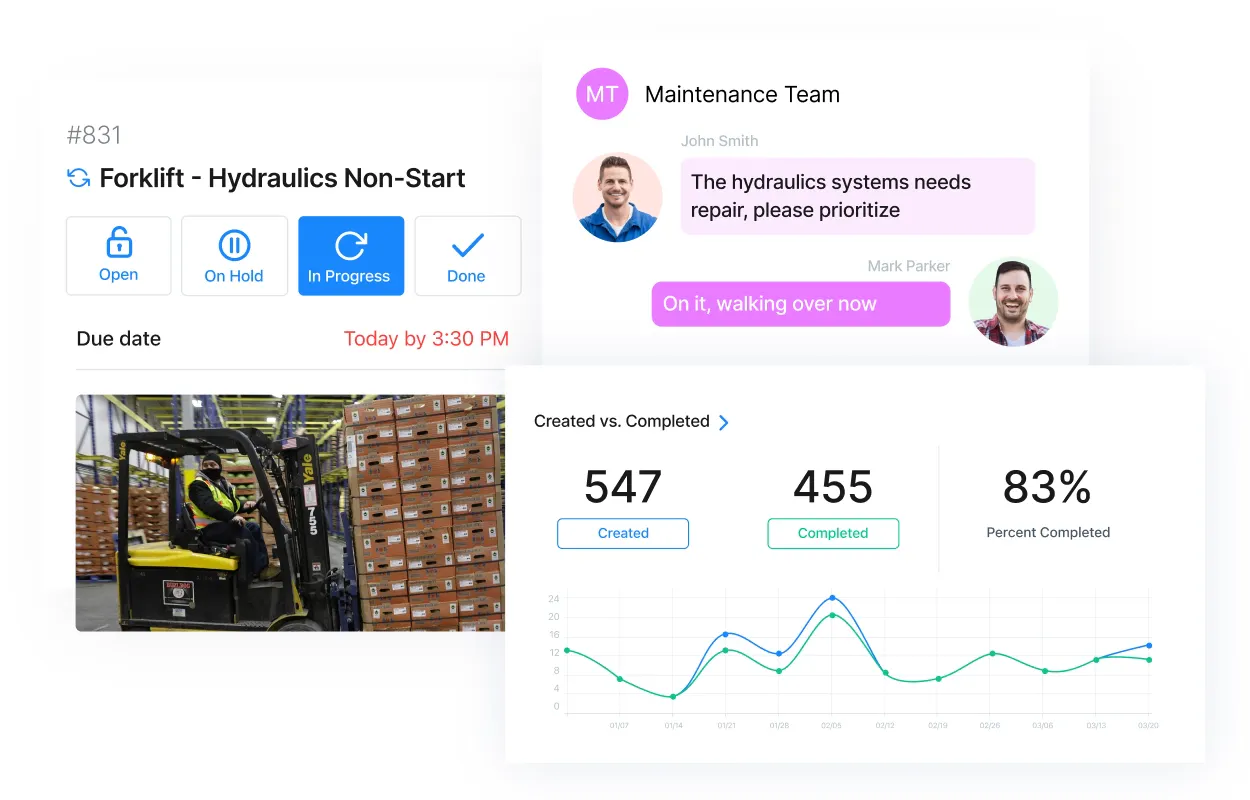
MaintainX’s core product is its CMMS module, which provides the backbone for digital operations management. The CMMS allows customers to schedule and track maintenance, with frontline workers monitoring work orders, planning preventive maintenance, and deploying condition-based maintenance triggered by outlier equipment data. Workers can also use individual, group, and work-order chat threads to share knowledge and ask questions, even when offline. Photo and video sharing lets workers show exactly what they see on-site.
MaintainX’s functionality extends beyond the frontline, as supervisors can manage their workforce by assigning work orders to available technicians, reorganizing scheduled work, and automating work-record storage for audits. Supervisors can also use data-driven insights from key performance metrics to make decisions using built-in dashboards and automatically contact stakeholders. More broadly, customers can streamline parts management by connecting to their ERP system (Microsoft Dynamics, Oracle, or SAP) to view parts inventory across sites, reducing inventory management costs.
As of July 2026, MaintainX claimed that its platform enabled customers to achieve a 49% increase in on-time inspections, a 53% increase in work order completion rates, and an average of 250 hours saved annually for maintenance managers.
EAM (Enterprise Asset Management) Software
Source: MaintainX
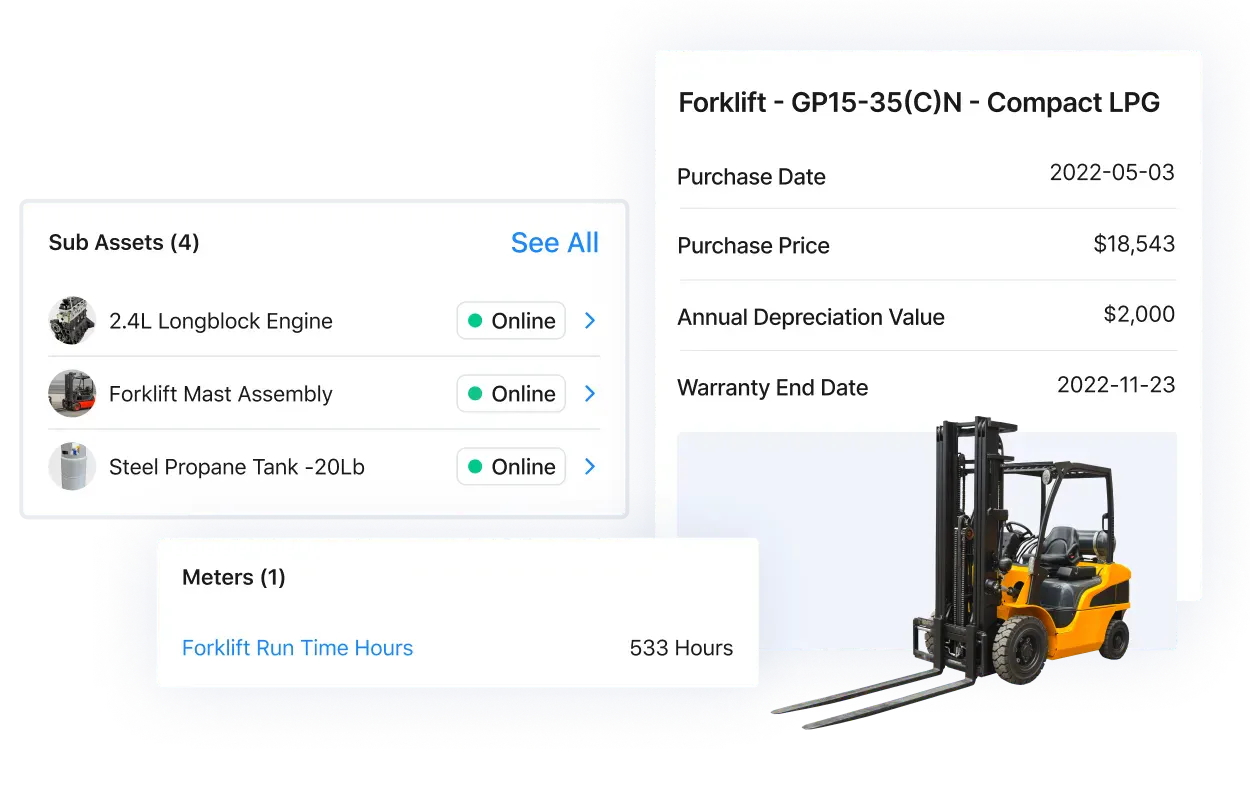
MaintainX also offers EAM software, whose functionality extends beyond basic work order tracking and is scalable to large enterprises. It provides a unified digital record for every asset, consolidating work history, maintenance frequency, meter readings, spare parts, and downtime logs. This allows organizations to monitor performance across sites and identify underperforming equipment.
The EAM lets customers use advanced asset maintenance methods. Frontline workers can focus on preventative maintenance, using time-based or asset-usage schedules supported by predictive and prescriptive maintenance models. Workers can access asset reports to analyze asset health, cost drivers, and depreciation trends to make better repair-or-replace decisions and define risk priorities for corrective action.
For supervisors, MaintainX streamlines asset management workflows. Supervisors receive faster alerts upon inspection failures, assign work orders between technicians, and monitor work order completion rates to maintain asset upkeep. Supervisors can also standardize the asset management structure by defining asset criticality levels for maintenance prioritization, assigning assets to specific facility locations, and using visual inspections to enable lean project management.
As of June 2026, MaintainX’s EAM segment has helped customers save 30% on monthly maintenance costs, reduce unplanned downtime by 32%, and improve overall equipment effectiveness by 39% (figures self-reported by MaintainX).
Industrial Controls and IoT
Source: MaintainX
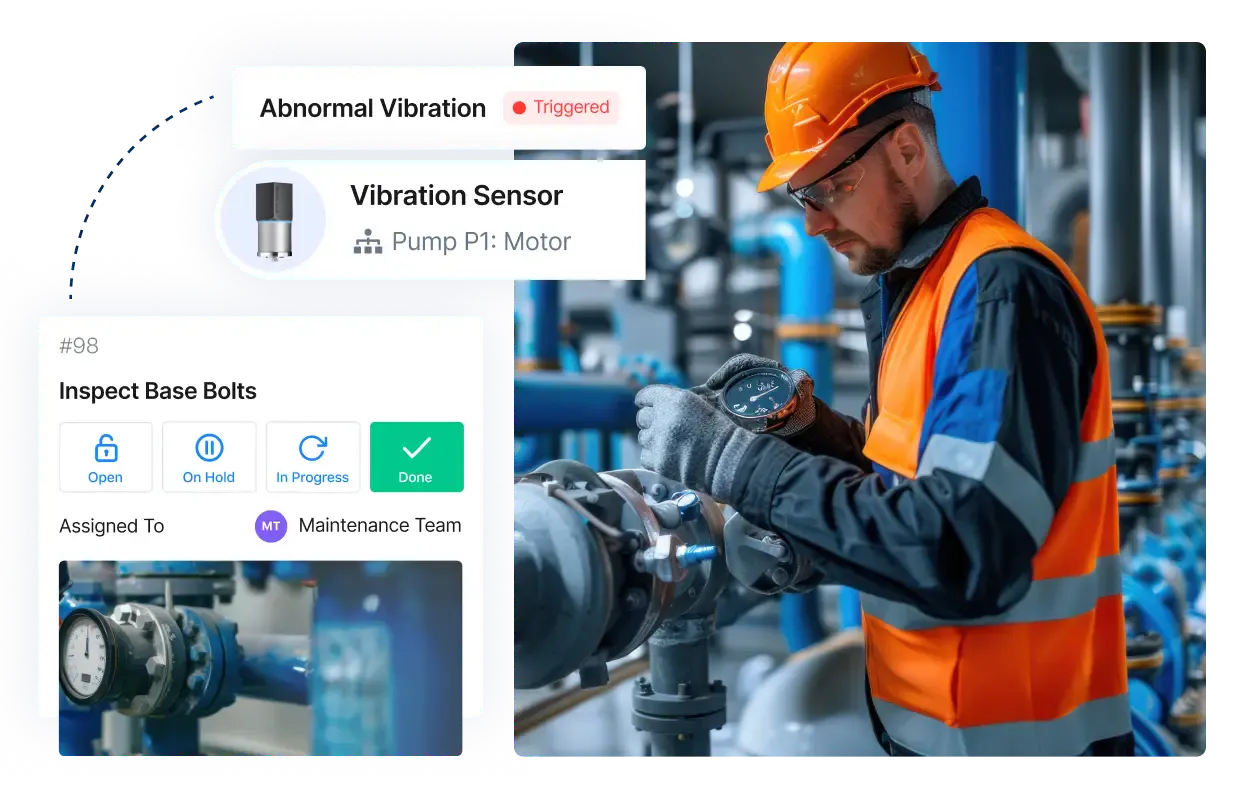
MaintainX connects operational workflows to industrial systems through its industrial controls and IoT capabilities. The platform integrates with sensors to collect and act on real-time machine data, such as temperature, vibration, and energy consumption. This allows customers to connect their control and data acquisition platforms to MaintainX, optimizing data flow. Equipment can also be linked to responsive actions, with work-order trigger automation using AI to guide technicians through the right steps to fix.
More broadly, this offering allows for asset health and performance monitoring. Downtime events, sensor readings, and work history are stored in one place, enabling in-depth review of each asset and faster shop-floor response times. Supervisors can maximize resource allocation and keep costs down by waiting for machine signals to identify necessary maintenance work orders, reducing manual inspections and unnecessary preventative tasks. Real-time readings, work history, and technician notes can be accessed by all team members, allowing for better trend identification and more reliable decision-making. This can be combined with predictive maintenance algorithms to optimize worker time and develop continuous improvement practices.
In 2024, MaintainX partnered with Inductive Automation to enable integration with Ignition, one of the most widely deployed industrial automation platforms. The integration lets operators generate MaintainX work orders directly from Ignition dashboards when sensor thresholds are exceeded, accelerating frontline workers' response times and making operational data more actionable for supervisors.
Integrations Marketplace
Source: MaintainX
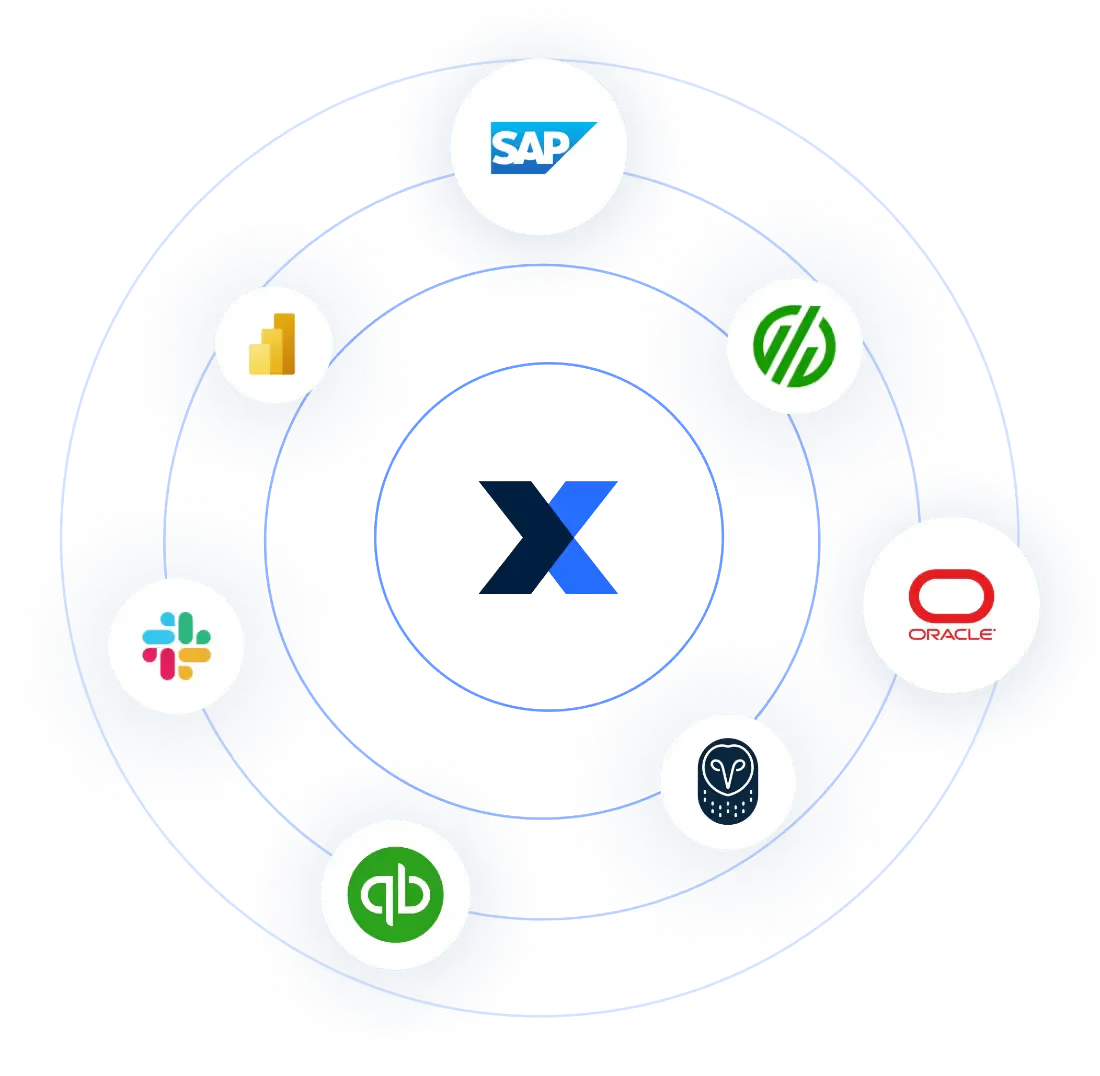
MaintainX’s Integrations Marketplace connects the platform with the broader enterprise tech stack. Users can integrate MaintainX with ERP systems (SAP, NetSuite), communication tools (Slack, Microsoft Teams), and analytics suites (Power BI, Tableau) so data flows across departments. As of June 2026, the company integrates with over 31 technology providers. This marketplace model reduces IT complexity and enables interoperability, which is attractive for mid-sized industrial companies without dedicated IT teams. For example, the SAP integration syncs work order and inventory tracking between MaintainX and SAP, ensuring that what happens on the factory floor is reflected immediately in enterprise resource systems.
Expert Implementation
While many enterprise software deployments can take months, MaintainX emphasizes speed and accessibility. Its Expert Implementation service offers guided client onboarding, workflow configuration, and employee training to get teams live as quickly as possible. As of June 2026, the company has performed over 3K implementations with a 98% adoption rate (figures self-reported by MaintainX).
MaintainX employs an implementation team of engineers with experience across the verticals the company sells into to ensure clients are onboarded successfully. Beyond access to self-serve onboarding materials such as the MaintainX Academy, customers have the option to choose between guided, expert-led, and custom services for businesses of all sizes.
Other Use Cases
Other, secondary use cases MaintainX supports include digital inspection management and checklists (to reduce incidents), facility maintenance (to keep track of work across a facility, prioritize work requests, and communicate across teams), and vendor management (centralizing vendor information, sharing work orders with vendors, and tracking purchase orders).
AI Maintenance with CoPilot
In 2025, MaintainX launched CoPilot, an AI assistant that generates work-order insights from OEM manuals and work order history. It can automatically create work orders, build custom procedures, and find diagrams within manuals among other capabilities.
Customers can turn manuals into work orders and procedures. By uploading an equipment manual, frontline workers can generate procedures by asking CoPilot to search for specific details. Workers can also type, upload files, or use speech-to-text to generate checklists, and communicate with voice memos that are transcribed to text by AI. CoPilot also helps minimize human error with anomaly detection, alerting technicians when data looks abnormal, which allows for more effective preventative maintenance.
CoPilot helps both supervisors and technicians through interaction. Technicians can ask questions about specific maintenance steps, and supervisors can use CoPilot to track down details on individual assets.
Market
Customer
As of April 2026, more than 13K businesses used MaintainX. These span from small single-site teams seeking basic operational improvements to large multi-site organizations with highly customized requirements, across a wide range of industries. Major customers include Marriott, McDonald’s, Volvo, and DHL.
Although MaintainX started by focusing on the small business frontline worker, it has evolved to target the middle market with asset-intensive operations. These firms have mid-sized industrial sites that manage multiple assets but lack the legacy enterprise asset-management stack and heavy IT infrastructure of large incumbents. Such companies can generate meaningful savings from CMMS software. Based on customer profiles, relevant buyer personas include facilities managers, procurement professionals, and, in some cases, even presidents or CEOs. Some smaller customers also report including frontline workers in the purchase decision.
A major sales challenge is adoption risk, as many field technicians initially resist adopting new tools. A 2024 study found that B2B buyers comprise an average of 28 individuals who conduct a 6.1-month buying journey, which slows the sales cycle. One MaintainX customer said MaintainX mitigates these challenges through an intuitive UI, cited as the main reason for choosing the company in bake-offs against competitors.
One MaintainX engagement was with a McDonald’s franchise spanning 22 stores. The facilities manager and his team of five employees had tracked all assets manually using spreadsheets. After partnering with MaintainX, the franchise saw an 85% decrease in equipment downtime, with mean time to repair falling from 400 hours to 60 hours within four months.
A separate case study saw MaintainX partner with Cintas, a Fortune 500 company supplying uniforms and cleaning products. Cintas was looking for a new CMMS provider because its legacy systems could no longer support adding new sites. With MaintainX, all 200 sites were integrated within nine weeks.
Market Size
The industrial software sector was estimated to be valued at $146 billion in 2023 and is forecast to grow at a 13.5% CAGR through 2030, driven by the adoption of cloud-based solutions. The EAM industry, meanwhile, was valued at $4.7 billion in 2024 and is expected to grow at a 7% CAGR to 2034. This is up significantly from 4.1% growth between 2019 and 2023, driven by the rapid integration of IoT with EAM software and a rebound from the COVID-19 pandemic.
More narrowly, the CMMS market was valued at $2.4 billion in 2026 and is expected to grow at a 9.3% CAGR to reach $5.9 billion by 2036. Within this market, small and medium enterprises had around 69% market share. In 2024, the manufacturing segment accounted for 22.4% of revenue share as the largest CMMS end market, with healthcare expected to see the highest growth within CMMS, at a 12.1% CAGR, given its asset intensity, including medical devices and HVAC systems. Framing the opportunity within the non-desk-worker universe, the market can also be sized at 100 million individuals.
Competition
Competitive Landscape
The asset-management software includes long-established enterprise vendors and newer entrants that target smaller customers. Large incumbents such as IBM Maximo, eMaint, and SAP EAM focus on the upper end of the market, offering highly configurable systems designed for large corporations. These solutions are typically expensive, slow to deploy, and complicated to use.
The middle market is served by a cohort of cloud-native startups, including MaintainX, Brightly (owned by Siemens), Fiix (owned by Rockwell Automation), Limble, and UpKeep. These firms have targeted smaller businesses with simpler asset management requirements, focusing on easy-to-use mobile platforms with low implementation friction and high ROI.
MaintainX’s competitive advantage stems from its combination of simplicity and scalability. It can serve a single-site maintenance team or a multi-facility enterprise without the customization burden typical of legacy EAM platforms, reducing setup time. Its moat relies on a blend of low cost, intuitive mobile UI, and detailed operational data capture, though continued investment in product expansion and IoT integrations is critical to maintain differentiation as competitors such as Brightly and Fiix continue to invest in R&D.
Competitors
Brightly: Founded in 1999 as Dude Solutions, Brightly provides a suite of operations software, including Asset Essentials for asset management, Origin for asset health monitoring, and TheWorxHub for healthcare-focused CMMS. The company was acquired by Siemens Smart Infrastructure for $1.6 billion in 2022 to complement Siemens’ existing expertise in digital buildings. As such, Brightly has seen adoption in end markets dominated by large physical facilities, such as healthcare and education, rather than the industrial core that MaintainX targets. However, a report from a former Brightly customer highlights that the company is increasingly investing in its mobile-first industrial solutions, with users reporting a relatively speedy three-month implementation period.
IBM Maximo: Originally developed in 1985 by Project Software and Development Inc. and later acquired by IBM (as MRO Software) in 2006 for approximately $740 million, Maximo remains one of the most established enterprise asset management and CMMS platforms. Designed for large industrial enterprises, it offers deep configurability and advanced analytics but requires extensive IT resources and long deployment timelines. Pricing reflects its target customer, starting at around $3.5K monthly for its Essentials product. In addition to traditional maintenance and inspection solutions, it also offers lease and space management, capital planning, and inventory management products.
Limble: Founded in 2015, Limble is among the most successful independent challengers in the CMMS space. It raised a $58 million Series B in 2023 at an estimated $450 million valuation. Limble is perhaps MaintainX’s most direct competitor, given its focus on small businesses and adjacent EAM product, offering a highly intuitive mobile interface, rapid onboarding, and low prices.
UpKeep: Founded in 2014, UpKeep was the original “mobile-first CMMS.” The company has raised $48.8 million across four announced rounds as of July 2026, with the most recent being a $36 million Series B in 2020 led by Insight. Based on customer reviews, UpKeep also largely targets SMEs with low prices and ease of implementation, though it has a smaller footprint than MaintainX, with 4K customers as of June 2026, including notable companies such as Unilever, Subway, McDonald’s, Marriott, and Pepsi.
Fiix: Founded in 2008 in Toronto, Fiix is a modern cloud CMMS platform. It was acquired by industrial automation company Rockwell Automation in 2020, following a $53 million Series C a year earlier. Fiix was rolled into Rockwell’s Software and Control operating segment, increasing its industrial reach and positioning it slightly above MaintainX’s target mid-market in price and implementation effort. In a May 2025 interview, a potential customer described Fiix’s UI as worse than MaintainX’s. This echoes the sentiment of a customer who, in 2012, noted challenges with customization given the required level of integration.
eMaint: Founded in 1986 and later acquired by the industrial manufacturer Fluke Corporation, eMaint was among the earliest commercial CMMS vendors. The company’s long tenure and legacy customer base have allowed it to remain widely adopted across end markets, with over 50K users worldwide as of July 2026. However, slower UI modernization and higher prices relative to SME-focused competitors have opened the door to new entrants.
Business Model
Source: MaintainX
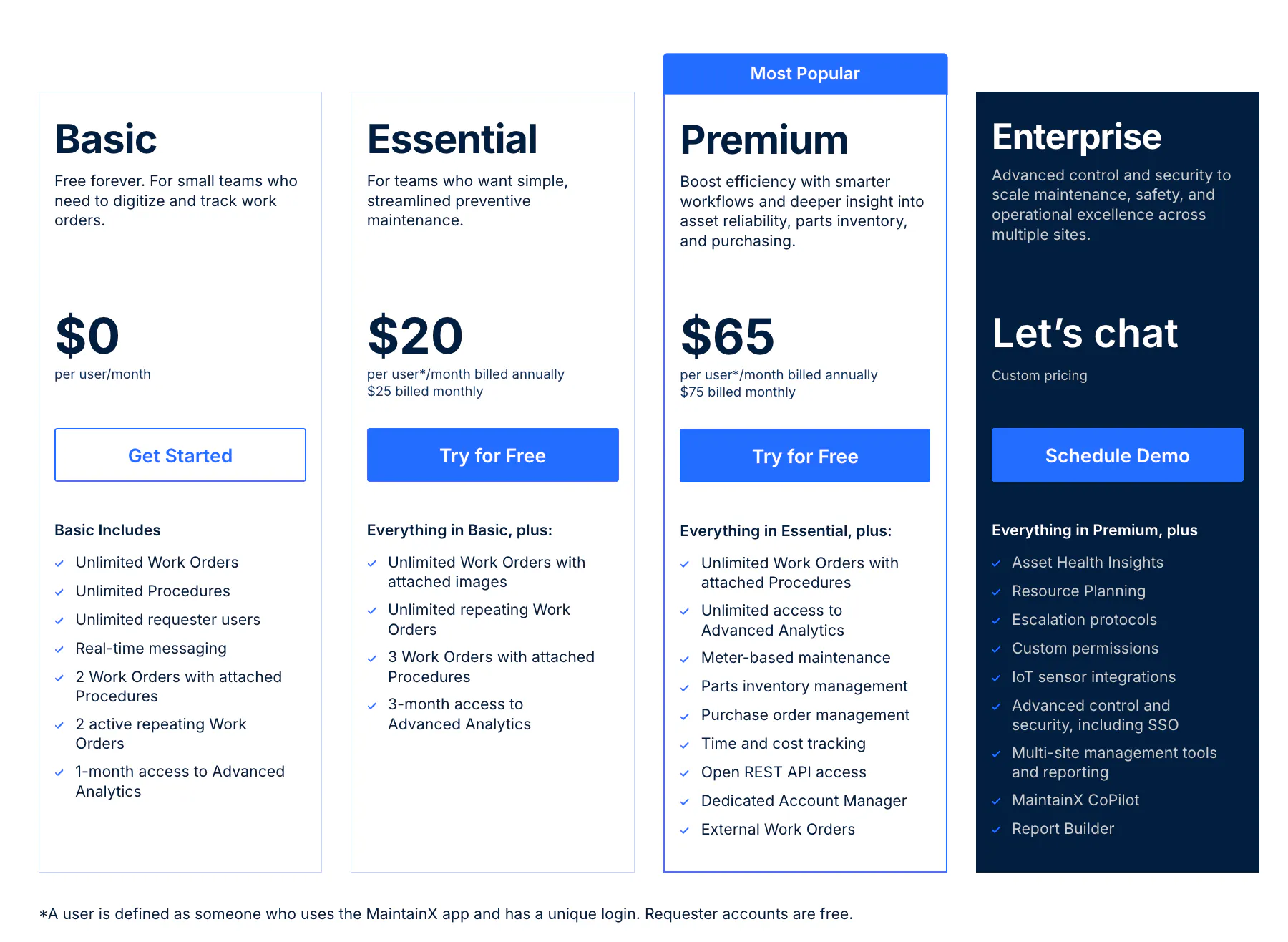
MaintainX operates a SaaS model built around a tiered subscription system. The platform generates recurring revenue through per-user monthly subscriptions that scale with team size and feature depth. Its model begins with a freemium entry point, a “Basic” plan that provides essential work-order and messaging functionality at no cost, to drive adoption within small teams before upselling into paid tiers.
Paid plans, namely Essential ($20-25 per user per month) and Premium ($65-75 per user per month), extend Basic access and add advanced features such as inventory management, cost tracking, and API access. Larger industrial clients can purchase a customizable Enterprise plan with additional features such as IoT sensor integrations, advanced security, and AI CoPilot. This tiered model aligns with the company’s bottom-up adoption motion: entry through small maintenance teams, followed by expansion across facilities as operational leaders recognize the system’s ROI.
MaintainX’s revenue mix is heavily skewed toward subscription-based ARR, with minimal reliance on one-time fees. Implementation is factored into the subscription cost and expected to be completed quickly with the company’s dedicated implementation team. MaintainX also benefits from natural expansion within accounts. As teams digitize additional sites or add more assets, usage and user counts increase, boosting average revenue per customer. Because the platform integrates directly into maintenance workflows, it drives high user stickiness and recurring revenue, with MaintainX claiming in March 2026 that companies that “implement a CMMS, such as MaintainX, typically see first-year returns on investment ranging from 25% to 300%.”
Traction
MaintainX has scaled quickly since launching in 2018, growing from an early-stage productivity tool for maintenance teams into a global CMMS and work-execution platform.
MaintainX previously highlighted a 13x increase in revenue (a 90% CAGR) from its Series B round in mid-2021 through its Series D round in mid-2025, reflecting rapid adoption as industrial organizations accelerated digitization of frontline operations post-pandemic. In 2024, MaintainX was ranked the 48th fastest-growing technology company in North America. The announcement of MaintainX’s May 2026 acquisition by Autodesk disclosed that MaintainX expects more than $135 million in ARR for calendar year 2026, with growth in excess of 50%.
Customer adoption has expanded in parallel with revenue growth. As of April 2026, MaintainX serves over 13K customers managing 13.9 million assets worldwide, up from 6.5K customers managing 2.5 million assets in late 2023. Major clients include Cintas, Duracell, McDonald’s, and Titan America. MaintainX has also been named the #1 rated EAM platform in G2’s Spring 2025 rankings.
Valuation
In May 2026, Autodesk agreed to acquire MaintainX in an all-cash transaction valued at $3.6 billion. The deal is the largest in Autodesk’s history and is expected to close before the end of Autodesk’s fiscal year ending January 2027, subject to regulatory review. Autodesk plans to fund the transaction with cash on hand and debt financing.
Against MaintainX’s disclosed calendar-2026 ARR target of more than $135 million, the $3.6 billion price implies a forward ARR multiple of approximately 27x. Autodesk has framed the deal as the operations leg of its “design, make, and operate” strategy, with MaintainX folding into the newly-formed Autodesk Operations Solutions division alongside Tandem, FlexSim, Fusion Operations, and Factory Design Utilities.
The acquisition price represents a 44% step-up over MaintainX’s private valuation. The company’s Series D in July 2025 was co-led by Bessemer Venture Partners and Bain Capital Ventures, raising $150 million at a $2.5 billion valuation. That round was intended to fund the expansion of AI and machine-health monitoring capabilities, predictive maintenance solutions, EAM development, and geographic expansion.
Prior to Series D, MaintainX raised a $50 million Series C in late 2023 at a $1 billion valuation, a $39 million Series B in mid-2021, and earlier seed and Series A rounds. By the time of its acquisition, MaintainX had raised $253.8 million across five funding rounds, with key investors including Bain Capital Ventures, D.E. Shaw Ventures, Amity Ventures, August Capital, Founders Circle Capital, Sozo Ventures, and Fifth Down Capital. Strategic investors have included Jeff Immelt (past Chairman and CEO of GE), Jeff Lawson (CEO of Twilio), and Chris Comparato (CEO of Toast).
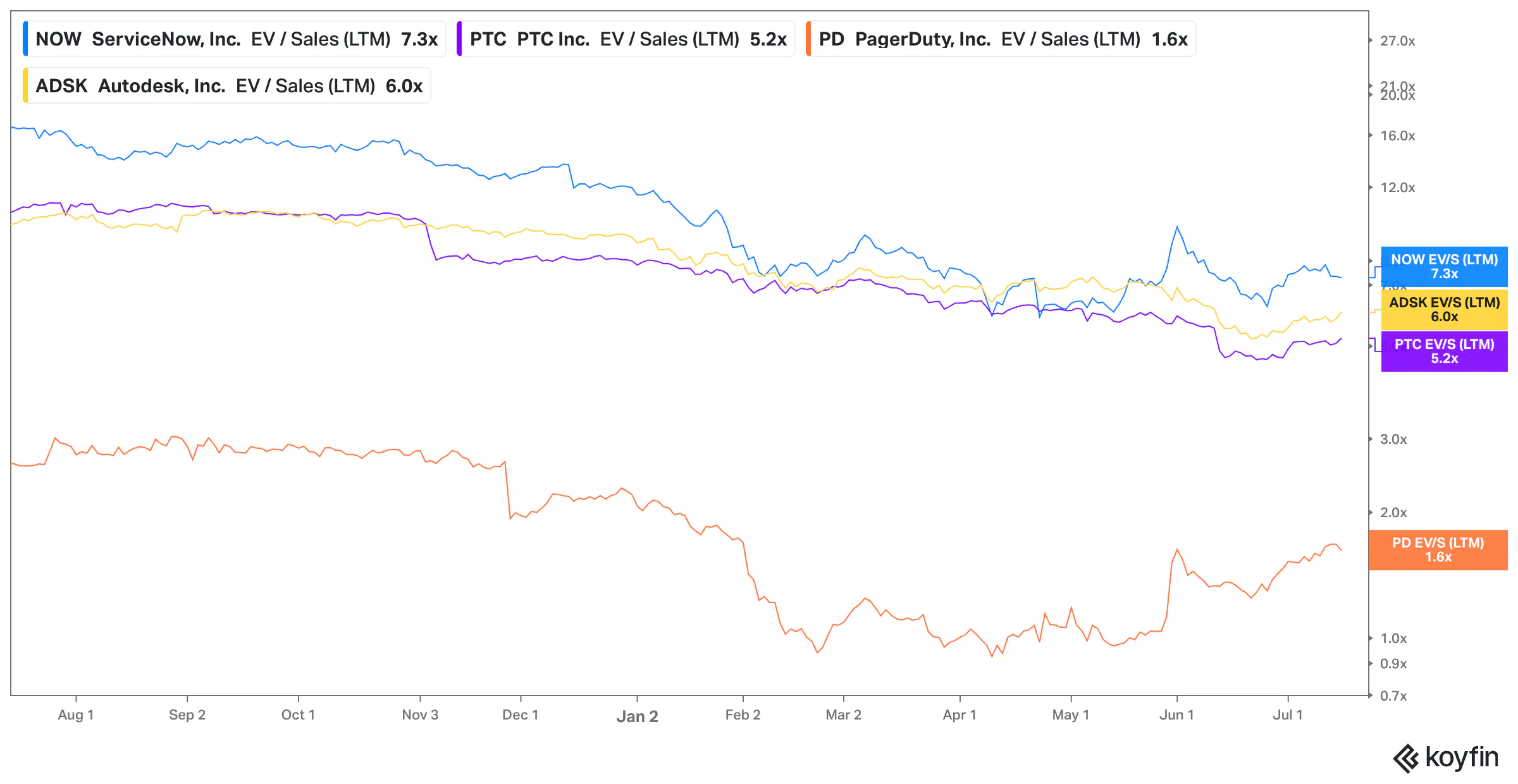
The 27x forward ARR multiple sits above where comparable public industrial-software peers trade in 2026. Public industrial and operations software companies, including ServiceNow, PTC, Autodesk, and PagerDuty, traded at materially lower revenue multiples, ranging from 1.8x to 7.3x, as of July 2026, reflecting differences in growth and scale.
Source: Koyfin
Key Opportunities
Autodesk Integration and Operations Platform Scale
MaintainX’s acquisition by Autodesk will give the company access to a customer base spanning architecture, engineering, construction, manufacturing, and product design, segments where Autodesk’s Construction Cloud, Fusion, and BIM 360 already have penetration but where operational maintenance data has historically lived outside Autodesk’s tools. Autodesk framed the acquisition as the operations leg of its “design, make, and operate” strategy, sitting alongside Tandem (digital twins), FlexSim (simulation), Fusion Operations, and Factory Design Utilities within the new Autodesk Operations Solutions division.
The integration should allow MaintainX to cross-sell into Autodesk’s existing customer base, distribution leverage from Autodesk’s enterprise salesforce, and a tighter data loop between asset design (CAD/BIM models in Autodesk) and asset performance (work-order and sensor data in MaintainX). Autodesk CEO Andrew Anagnost described MaintainX’s operational data as providing “the context needed to make AI accurate, actionable, and valuable” in industrial settings, the most direct articulation of the cross-product AI thesis the deal is built on.
Expansion into Predictive and AI-Driven Maintenance
The shift from reactive to predictive maintenance remains a major tailwind for MaintainX’s next phase. Predictive maintenance, which uses AI and sensor data to anticipate equipment failures, is expected to grow from $13.9 billion in 2026 to $23.8 billion by 2031, at an 11.4% CAGR.
MaintainX’s roadmap already incorporates elements of this transition. Its AI CoPilot, sensor integrations, and asset analytics capabilities position it to serve as a platform for both work execution and machine intelligence. The company’s July 2025 Series D announcement explicitly cited investment in AI-powered intelligence and predictive maintenance solutions.
Under Autodesk, this thesis gains additional scale: the combined operational dataset plus Autodesk’s design and simulation tools (Fusion, Tandem) creates a fuller picture of asset behavior than either side could build on its own. The opportunity is to evolve MaintainX from a digital CMMS into a real-time operational intelligence platform that spans the manufacturing, logistics, utilities, and building operations markets that Autodesk already serves.
International and Mid-Market Growth
MaintainX’s pre-acquisition customer base was concentrated in North America, with increasing CMMS adoption in Europe and the Asia-Pacific region, where operations digitization lags. While the US CMMS sector is expected to see a 3.9% CAGR to 2034, the industry is expected to grow at 10.5% in Australia and 8.2% in Japan. Many mid-sized industrial firms lack dedicated IT teams and have historically struggled to implement legacy enterprise systems, so MaintainX’s mobile-first, quick onboarding, and freemium model are well-suited to capture customers that incumbents have traditionally underserved.
As connectivity infrastructure improves across developing markets and IoT device installations are expected to surpass 40 billion globally by 2030, MaintainX’s addressable base of connected assets will expand. The MaintainX Series D announcement mentioned industry and geographic expansion as a future growth avenue, and Autodesk’s existing international footprint (with a substantial share of its revenue coming from outside the US) provides a built-in distribution channel.
Key Risks
Autodesk Deal Close and Integration
The Autodesk acquisition is signed but not yet closed, with closing expected before the end of Autodesk’s fiscal year ending January 2027, subject to regulatory review and other customary conditions per the announcement. A $3.6 billion deal is sizeable enough to attract antitrust scrutiny, and the operations-management category has overlapping vendors (Brightly, IBM Maximo, SAP EAM) that regulators could examine for substitutability. A delayed or blocked close, or remedies that limit cross-product integration, would weaken the strategic thesis underpinning the premium price.
The regulatory landscape cleared significantly in July 2026 when the FTC granted early termination of the antitrust waiting period, removing a major hurdle to closing. However, even assuming a clean close, integration risk is material. MaintainX has grown by being a fast-moving, mobile-first, freemium-driven product. Autodesk has historically sold via enterprise CAD seat licenses and channel partners. Cultural and go-to-market friction during integration could slow product velocity, disrupt the existing customer pipeline, and trigger churn among small and mid-market customers who originally chose MaintainX precisely because it wasn’t enterprise software. The 27x forward ARR multiple Autodesk paid leaves little margin for execution misfires.
Competitive Saturation and Pricing Pressure
The CMMS and asset-management software market is crowded, with both enterprise incumbents and new entrants competing for middle-market customers. Some market studies highlight nearly 30 competitors. All major new entrants have expanded from their small-business, worker-first base to provide multi-site and customized “Enterprise” solutions for larger clients. Meanwhile, incumbents (with the exception of Maximo) offer simplified CMMS and EAM products at prices similar to those of new entrants.
This proliferation may exert downward pressure on pricing. Many mid-market buyers are highly cost-sensitive: an EAM study found that cost was among the largest obstacles in leveraging new technologies for 54% of respondents. If pricing competition intensifies, MaintainX may struggle to maintain revenue growth without significant differentiation through AI or ecosystem lock-in. Larger incumbents with bundled offerings may subsidize their pricing, making it difficult for standalone vendors (which, post-Autodesk, MaintainX no longer is) to compete on total cost of ownership.
Data Security and Privacy
A 2025 study reported a 34% increase in vulnerability exploitation across the industrial supply chain. As MaintainX scales across asset-intensive sectors, it handles sensitive operational data that could disrupt physical assets or reveal proprietary industrial processes if compromised. Maintenance logs, IoT telemetry, and equipment performance data often contain information about plant uptime, failure rates, and asset configurations, all of which are operationally sensitive. MaintainX itself cites data security as a common objection to CMMS adoption.
Competitors such as IBM Maximo and SAP EAM have built enterprise-grade security setups, a bar that newer, cloud-native vendors must meet or exceed to win major accounts. For MaintainX, a single large-scale breach, whether through a compromised API, insecure integration, or third-party sensor network, could erode customer trust, delay enterprise procurement cycles, and disqualify the company from regulated verticals such as pharmaceuticals or aerospace. Post-acquisition, a breach also exposes Autodesk’s broader customer base.
Summary
MaintainX sits at the intersection of industrial software and frontline workforce digitization, a space long underserved by traditional enterprise vendors. Rising downtime costs, regulatory traceability requirements, and the spread of industrial IoT infrastructure have accelerated demand for digital maintenance tools. By focusing on mobile usability for frontline workers, MaintainX scaled to 13K customers and 13.9 million managed assets, transforming maintenance execution from a paper-based, reactive process into a connected, data-rich workflow system used by small- and mid-sized businesses across the US.
In May 2026, Autodesk agreed to acquire MaintainX for $3.6 billion in cash, the largest acquisition in Autodesk’s history. The deal is expected to close before the end of Autodesk’s fiscal year ending January 2027. The key questions are whether Autodesk can preserve MaintainX’s mid-market velocity inside an enterprise-CAD-anchored go-to-market, and whether the cross-product data loop between design, make, and operate produces a real operational intelligence platform or a partial integration that leaves standalone CMMS competitors room to keep growing.